What is the DIN Abrasion Test?
One way to measure the abrasion resistance of rubber is through the DIN abrasion test. The main samples used for this test are tires, shoe soles and conveyor/drive belts. DIN abrasion Testers ensure that these materials are safe before mass production. Durable materials are also a sign of better quality.
What is DIN in rubber?
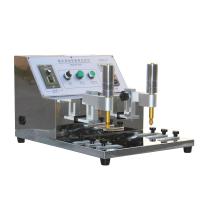
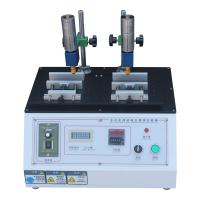
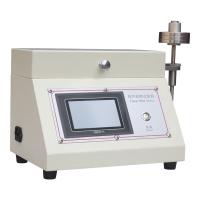
describe. DIN Abrasion Tester – The DIN Abrader is a rotating drum abrasion Tester used to test the abrasion resistance of rubber articles under pressure with a specific grade of abrasive paper. DIN wear standards include ISO 4649, DIN 53516, ASTM D5963, SATRA TM174 and more.
What does the abrasion resistance index mean?
A measure of the abrasion resistance of a vulcanized material or synthetic rubber compound relative to a standard rubber compound under specified conditions.
What are the three types of wear?
There are three types of abrasions, including linear or scratch abrasions, scrape or brush abrasions, and pattern abrasions.
Linear or scratch wear. Linear abrasions are caused by tangential forces, resulting in peeling of the epidermis.
Abrasions or brush abrasions.
Graphic wear.

How to calculate the wear loss of rubber?
Abrasion resistance is measured by moving a test piece over the surface of an abrasive plate mounted on a rotating drum and is expressed as volume loss (in cubic millimeters) or abrasion resistance index (in percent).
What is abrasion resistance?
Abrasion resistance refers to the ability to withstand frictional wear and repeated scratching or rubbing caused by mechanical parts.
How to improve the wear resistance of rubber?
Any rubber compound, whether it has wear characteristics or not, can be improved by adding additives and reinforcing fillers. When effectively incorporated into the rubber matrix, these ingredients can improve the ability of most compounds to withstand abrasive forces.
How to improve wear resistance?
The abrasion resistance of concrete can be increased by adding some SCMs (such as GGBFS, FA, SF and superplasticizers), by changing the void content and porosity (Haque and Kayali, 1998; Shannag, 2000).
What is the purpose of abrasion testing?
Wear tests are performed to test the hardness of the aggregate. The principle of the Los Angeles wear test is to find out the percentage of wear due to the relative friction between the aggregate and the steel balls used as abrasive.
How long does it take for abrasions to heal?
Most scrapes heal well without scarring after home treatments. Minor scrapes can be uncomfortable, but they usually heal within 3 to 7 days. The larger and deeper the abrasion, the longer it will take to heal. Large, deep abrasions may take up to 1 to 2 weeks or longer to heal.
Which elastomer has the right abrasion resistance?
| elastomer | wear resistance |
| interrupter | very good |
| thermoplastic elastomer | good / very good |
| natural rubber | good / very good |
| Butyl | good |
What is the wear standard of Din 53516?
ASTM D5963 abrasion standard and DIN 53516 require only 10N to press the test piece against the roller. However, the ISO 4649 wear standard allows a reduction of 5N or an increase of 20N in special cases. BS-903 Wear Standard is a British Standard.
Is the Din 53516 standard the same as ISO 4649?
The German DIN 53516 is an older standard that has been superseded by the ISO 4649 wear standard. But the DIN 53516 wear standard is still valuable and worth referring to. Some of these standards contain similar test methods and specifications. But there are also differences in the requirements and materials used for testing.
When will the Din Abrasion Tester stop?
Any vibration may produce inaccurate results. After the test piece has completed the wear distance of 40 meters, the machine stops. This is approximately 84 revolutions of the rotating cylindrical drum. Operators perform a series of tests using a test rubber compound and a standard rubber.
How is abrasion resistance measured in a tumbler?
Wear – The test method (ISO 4649 / DIN 53516) for testing wear is actually quite simple. Abrasion resistance is measured by moving a test rubber piece across the surface of an abrasive plate mounted on a rotating drum. It is expressed as cubic millimeters in volume loss, eg 150 mm³.