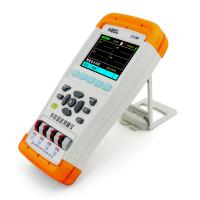
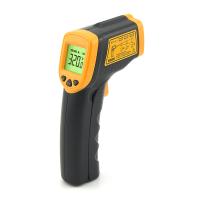
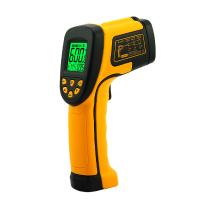
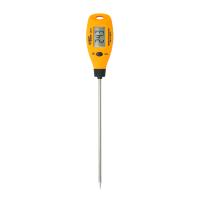
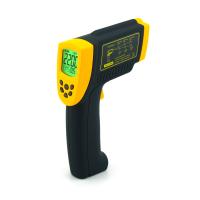
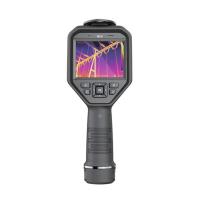
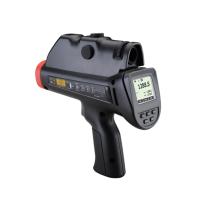
How it works : Infrared thermometers are used to measure the surface temperature of objects. The instrument's optics emit, reflect, and transmit energy , which is collected and focused on a Detector, where electronics convert this information into a temperature reading that is displayed. The laser on the instrument is only used to aim at the object under test.
Field of view: Make sure that the area of the object to be measured is larger than the diameter of the infrared circular light spot of the instrument. The smaller the target, the closer you should be to it. When accuracy is important, it should be ensured that the area of the measured object is not less than twice the measuring point.
Distance and spot diameter: When the distance (D) between the thermometer and the measured object increases, the spot (S) should increase accordingly.
Hotspot positioning : To find a hotspot, first point the thermometer at the outer edge of the measured area, and then slowly move the thermometer up and down to scan the entire area until the location of the hotspot is determined.
hint
1. It is not recommended to measure the surface temperature of shiny metal or smooth metal surface. (such as stainless steel, aluminum, etc.) Check the emissivity table.
2. This meter cannot be used to measure the surface temperature of objects blocked by transparent objects like glass. What is measured in this case will be the surface temperature of the glass or the like.
3. Steam dust, smoke, etc. will affect the accuracy of the measurement by hindering the emission of light.
Measurement Notes
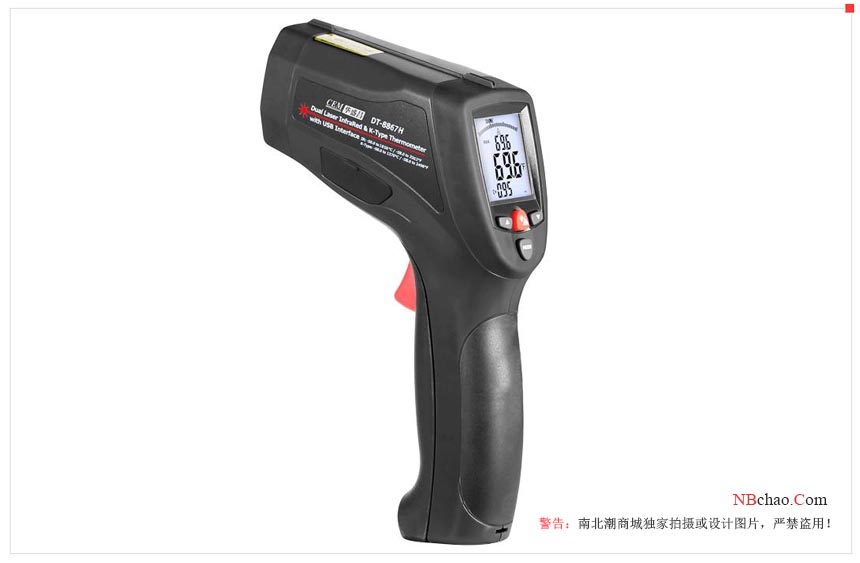
Hold the handle of the meter and point the infrared sensor at the object to be measured. The instrument can automatically compensate the error , but when the measurement environment temperature changes too much or a high temperature object is measured first and then a low temperature object is measured, the instrument needs to be thermally balanced in a stable environment for 30 minutes , to carry out the next measurement.
The laser is only used for long-distance aiming, and it can be turned off for short-distance measurement, which can save power.