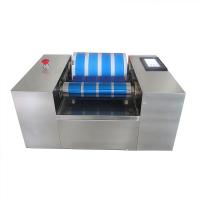
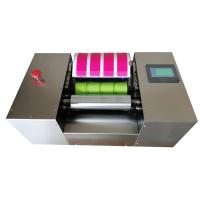
You don't want to end up with unhappy customers and wasted print. This means you need to know what affects your color and how to overcome these challenges to create color-matched prints that please your customers.
Screen printing color matching ink challenges
When you set out to match custom colors for your clients, you can run into many obstacles. Some factors that affect screen printing color matching include:
Substrate color. Usually in screen printing you're trying to match a color printed on a white background, if you're using the Pantone system these swatches will represent the white substrate. The color of the substrate will change the appearance of the ink. You can overcome this by printing the underbase, but this can result in a heavy hand, which may be undesirable.
Ink opacity. Different inks have different opacities. If your ink is too clear, the color of the substrate will show through the ink color more significantly, interfering with the look of the ink.
Ink done. Plastisol inks have a glossy surface, while water-based inks have a matte appearance. The sheen of the ink can affect the final look of the color. When following the Pantone system, the C (coated) designation would be closer to a glossy finish, while U (uncoated) would be more matte.
Substrate texture. Ink does not work the same on glossy polyester as it does on matte cotton. The texture of your substrate will affect the final appearance of the ink color.
light. Different types of lighting affect the way we see color. A color that appears to match your Pantone swatches under your store's fluorescent lighting may not look noticeably matched in direct sunlight.
insight. People's eyes perceive color in different ways. Some people can spot differences in color more acutely. What one person thinks is a color match may be completely inappropriate for another.

Overcoming Obstacles for Better Color Matching
Overcoming color matching challenges may not be easy, but there are steps you can take to achieve more accurate color matches.
Make sure your scale is accurate. If your scale doesn't measure the ink accurately when mixing it, your color won't match your swatches.
Keep your coloring book looking like new. Official Pantone books can be expensive, but not as expensive as throwing away a print copy because of a poor color match. These books will fade and wear out over time. Make sure to refresh your Pantone books as needed.
Don't rely on computer monitors. Never try to match colors online. Few computer monitors can portray true colors, and no two computer monitors can portray a color in the same way. Attempts to do color matching on a computer or to communicate color to a client are bound to fail.
Print samples. A separate approach to the color-matching challenges in screen printing—substrate color and texture, ink opacity, and ink texture—is printing samples. After matching the initial ink color, place the ink on the intended substrate to determine how the substrate and ink will affect the color. From there, you can make the necessary adjustments to achieve the desired color.
Invest in a light box. Light boxes emit different types of light in an enclosed space, so you can see how accurate your color matches are under different lighting conditions. If you're going to be doing a lot of highly accurate color matching in your store, a lightbox might be a worthwhile investment.
Know your color perception. A separate way to find out how you perceive color is to test your eyes. There are some simple online tests that can help you measure your ability to distinguish colors. If you find that identifying colors isn't your strong suit, you may want to test your team to see who would be a good match for color matching inks.
Ensure satisfied customers
The proper way to ensure that you end up with a client who is happy with your colorway is to communicate with that client throughout the process. First, understand what the customer's expectations are. They may request a specific color but be happy with a very close stock color. Or, for branding purposes, they may need to match the logo or company colors exactly. You won't know how accurate your matches are unless you ask.
It is important to communicate the limitations of color matching, and let your client accept that slight variations may occur - sometimes a good match is not possible. Make sure your client sees (and better yet sees in person) the swatches and printed samples you're trying to match. Let customers sign off on your samples so you know you've created a color match that meets their expectations. By understanding your customers' needs and making sure you're prepared to meet them, you're more likely to print products that will please them.