Why is Adhesion Important for Coatings?
The durability and performance of a coating depends on two fundamental properties. These are the cohesion and adhesion of the coating.
Cohesion is the internal strength of a material and is related to the strength of molecular forces within a bulk material. Adhesion is the strength of the bond formed between a coating and another surface.
Cohesive failure usually occurs in the film itself, but can also occur within the substrate.
Adhesion failure can be the result of air bubbles forming at the interface, delamination (delamination) of the coating, or any other condition resulting from low adhesion at the interface.
Long-lasting protective coatings require cohesion and adhesion. Adhesion-related failures will determine the life of a product's coating.
How to get good coating adhesion?
Generally, technical paints need to exhibit good adhesion to be effective. However, no single theory can describe the adhesion properties.
However, several basic coating mechanisms are known to define good adhesion. They are adsorption, chemical bonding and mechanical interlocking:
Adsorption means that the molecules in the coating wet or flow freely on the substrate and come into intimate contact with the substrate, forming interfacial (electrostatic) bonds with van der Waals forces.
A chemical bond is formed at the interface between the coating and the substrate.
The roughness with which the coating film penetrates the surface of the substrate. This will cause a mechanical interlock once the coating dries.
It is not necessary for all three mechanisms to occur to form good adhesion. Depending on the specific coating system, substrate and application method, different mechanisms may be at work. However, good wetting or adsorption is usually required.
What is the adsorption mechanism for coating adhesion?
Adsorption theory states that good adhesion results from molecular contact between the two materials and the resulting surface forces. Bonding is formed by the adsorption of coating molecules on the substrate and the resulting attractive forces, often referred to as quadratic (van der Waals) forces.
electrostatic mechanism
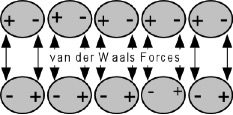
In order for these forces to develop, the distance between the individual surfaces must not exceed five angstroms. Therefore, the coating film requires intimate molecular contact with the substrate surface.
The process of establishing continuous contact between the coating and the substrate surface is called wetting.
Good wetting occurs when the coating flows into the valleys and crevices of the substrate surface. Wetting is poor when the coating spans surface irregularities.
For good wetting to occur, the substrate needs to have a higher surface energy than the coating film. Many materials have a higher surface energy than the applied coating. Therefore, wetting is simple. However, wetting can be prevented if the substrate is contaminated with lower surface energy materials.
In addition, if the substrate is contaminated with particles, a weak boundary layer may form that is prone to cohesive failure, weakening the coating system.
What is Chemical Bonding for Coating Adhesion?
Certain coatings are formulated with binders that have functional groups that can chemically bond to compatible substrates. In these applications, the formation of covalent chemical bonds occurs at the interface. These strong and long-lasting bonds are often the result of intimate contact or adsorption of the adhesive on the surface followed by a chemical reaction.
Coating systems containing reactive functional groups such as hydroxyl or carbonyl groups tend to adhere more strongly to substrates containing similar groups. Hydroxyl bonding is one of the reasons epoxy and polyurethane based polymers are often used in many formulations.
Probably the most widely used example of chemical bonding in the coatings industry are tackifiers or coupling agents. These multifunctional chemicals provide a "molecular bridge" between the molecules in the substrate and the coating film. One end of the adhesion promoter molecule has a functional group that will react with the coating, and the other end has a functional group that will react with the substrate. As the coating cures, a strong and durable bond is formed.
Organosilanes are an example of a widely used adhesion promoter. They are used as additives in many paint formulations and as primers to promote adhesion, improve moisture resistance and reduce the potential for interfacial corrosion.
What is the mechanical interlock of coating adhesion?
The surface of a solid material is never truly smooth. It usually consists of a maze of peaks and valleys. These are pores, holes, cracks and microvoids in the substrate. According to the mechanistic theory of adhesion, in order to function properly, a coating needs to penetrate surface irregularities, displace entrapped air at the interface, and lock mechanically to the substrate.
mechanical mechanism
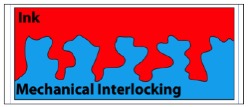
One way surface roughness aids adhesion is by increasing the total contact area between the coating and the surface. If interfacial or intermolecular attractive forces are the basis for adhesion, then increasing the actual contact area will proportionally increase the total energy of the surface interaction.
Another benefit of mechanical interlocking is that the rough surface will provide a crack propagation barrier and prevent the coating from delaminating from the substrate.
For smooth interfaces, little energy dissipation may be required to detach the coating from the surface and a clean detachment can be achieved. However, if surface roughness is present, the interface between the adhered materials will act as a "path break" between the separation coating and the substrate. These offsets dissipate energy and increase the final bond strength.
Thus, in many cases, adhesion and mechanical interlock forces work together at the substrate interface.
What is Surface Contamination?
According to Weldon (2009), surface preparation is a key factor for good adhesion. Soil and other pollutants inhibit adhesion through chemical and physical pathways. By reducing the influence of intermolecular forces between the surface and the applied material, or by blocking sites that provide opportunities for physical anchoring.
Schuman and Thames (2005) also stated that various important coating properties such as hardness, scratch resistance, chipping resistance and gloss are affected by the hardness, smoothness and adhesion of the underlying surface to the coating Influence.
What effect does contamination have on the adhesion of the coating?
Contamination between the coating and the substrate surface weakens the electrostatic intermolecular forces (Van der Waals forces) and interferes with the mechanical interlock.