With the development of the new material industry, the application of membrane materials is becoming more and more extensive, and the requirements for the performance of membrane materials are also getting higher and higher, and the chemical properties and structure of membrane materials play a decisive role in the performance of membrane separation. The requirements for membrane materials are good film-forming properties, thermal stability, chemical stability, acid and alkali resistance, microbial erosion and oxidation resistance, etc.
In the article "Development and Performance Research of Polymer Alloy Membrane Materials", how to prepare and study the compatibility and thermal stability of alloy membrane materials is introduced. The experimental research method has a good guiding significance for polymer modification. This article mainly shares the specific method of preparing polymer blend solid membrane materials to provide reference for users.
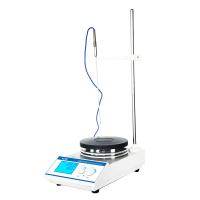
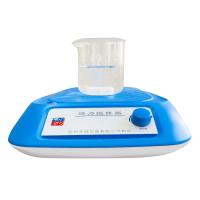
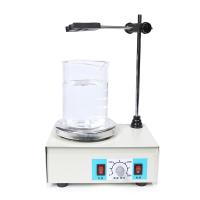
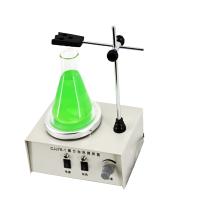
The experiment used a 78-1 type magnetic stirrer, a 101-1 type ventilated Drying Oven, and a pulverizer.

Above: Magnetic Stirrer

Above: constant temperature Drying Oven
In this experiment, a mixture of PVC and EC was used. The specific film-making method is as follows:
Weigh a certain amount of PVC and EC, dissolve them in pyridine respectively, and prepare PVC/EC series blended alloys under magnetic stirring, and the mass ratios are 90/10, 80/20, 70/30, 60/40, 50/50 , 40/60, 30/70, 20/80, 10/90, the total solution concentration is 80mg/mL. After blending for 24 hours, precipitate with 3 times the amount of distilled water, filter, and wash the precipitate with distilled water for 3 times. Dry in a constant temperature and ventilated Drying Oven at 50°C. Grind through a Grinder and save for later use. The preparation methods of PVA/PA-6 and PA-170/CA alloy solid film materials are the same as above, except that the total concentration of the solution is changed to 40 mg/mL and 25 mg/mL respectively.
The preparation of the alloy film this time is not to use a wire rod roller coating to form a film, but to use distilled water blending and precipitation to prepare it, which is a chemical film-making method.