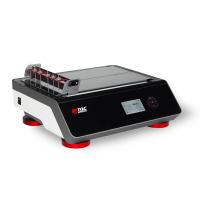
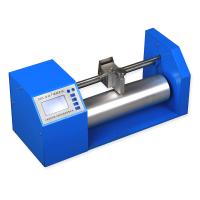
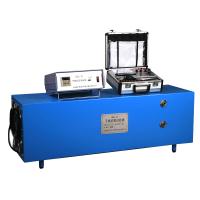
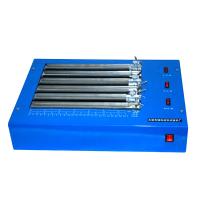
Today we will introduce the regulations of HG/T 4844-2015 on the detection performance and preparation of samples of low-zinc primers. This standard describes low-zinc coatings with a non-volatile matter content of less than 60% but not less than 40% metallic zinc. Among them, the detection performance of low-zinc primers includes drying time, impact resistance, flexibility, workability, coating appearance, adhesion, and salt spray.
Before sharing the specific subjects of testing performance, let’s first understand the classification of low-zinc primers. We can divide them into type I and type II according to the paint base of low-zinc primers. Type I refers to inorganic low-zinc primers, including solvent-based inorganic low-zinc primers and water-based inorganic low-zinc primers; type II refers to organic low-zinc primers.
What are the test performance subjects?
We know from the front that the detection performance of low-zinc primer includes the state in the container, non-volatile matter content, density, zinc content in non-volatile matter, pot life, etc., so what are the specific requirements of each subject?
1. The state in the container: when type Ⅰ and type Ⅱ are powder materials, the state should be a tiny uniform powder to meet the standard; when type Ⅰ and type Ⅱ are liquid materials and slurries, they need to be stirred and mixed. No hard lumps, in a uniform state.
2. Non-volatile matter content: During the test, the baking temperature should be adjusted to (105±2)℃, the baking time is 2 hours, and the sample weight is about 2g. If the non-volatile content of type I is ≥50%, and the non-volatile content of type II is ≥60%, it is regarded as meeting the standard.
3. The index of the density test shall be agreed upon by both parties according to the actual situation, and there is no other requirement.
4. Zinc content in non-volatile matter: the test adopts chemical analysis method and instrument method in parallel. If the test result shows that the zinc content in the non-volatile matter is ≥ 40% and < 60%, it is regarded as meeting the standard
5. Application period: We pre-adjust the temperature of each component of the product to (23±2)°C, mix them evenly in proportion, take 300 mL, and put it into a well-sealed metal container with a capacity of about 500 mL. If it exceeds 5 hours, the sample If there is no abnormality, it is rated as "pass".
6. Constructability: If there is no difficulty in the construction process, it will be rated as "no barriers to application".
7. Appearance of the coating film: Visually observe the sample under scattered sunlight. If the coating film is uniform, without sagging, blooming, pinholes, cracking and peeling, etc., it is rated as "normal".
8. Drying time: According to the test, when the surface dryness of type Ⅰ is ≦0.5h, and the hard drying is ≦8h; the surface dryness of type Ⅱ is ≦2h, and the hard drying is ≦24h, it is considered to be up to the standard.
9. Impact resistance: The test shows that when the impact resistance of Type II is 50/cm, it is considered to be up to standard.
10. Flexibility: If the test result shows that the flexibility of Type II is ≦2mm, it is regarded as up to standard.
11. Adhesion: The test uses a test column with a diameter of 20 mm, and the upper and lower test columns are concentrically connected with the test plate for the test. When the test results show that the adhesion force of type I is ≥3MPa and the adhesion force of type II is greater than or equal to 5MPa, it is regarded as up to standard.
12. Salt spray resistance: If the type I is within 240 hours, the one-way corrosion at the scratch is ≤ 2.0 mm, and there is no blistering, rust, cracking, peeling, etc. in the unmarked line area; If the one-way corrosion at the trace is ≤2.0 mm, and there is no blistering, rust, cracking, peeling and other phenomena in the unmarked line area, it is considered to meet the standard.
Preparation of test panels
1. Take a tin plate of 120 × 50 × (0.2~0.3) to test the drying time, impact resistance and flexibility. If the sample can be dried to a film thickness of (23±3)μm, it is considered up to standard.
2. Take a 150 × 70 × (3~5) sandblasted steel plate to test its construction property, painted appearance, adhesion and salt spray resistance. If the workability, smear appearance and adhesion of the model are dried, the film thickness is (75±3) μm, which is considered to be up to the standard; if the salt spray resistance of the model is dried, the film thickness is (90±3) μm, it is considered up to standard.