Today we will introduce the regulations of HG/T 4786-2014 on the detection of latex colorants. It is mainly suitable for water-based color paste of synthetic latex products such as natural latex and styrene-butadiene latex, nitrile latex, butyl latex, and neoprene latex. So what are the basic detection properties of latex colorants? What about standard requirements? Let's move on!
Testing requirements
1. Appearance: First, we open the container and stir with a spatula or stirring rod, and allow precipitation at the bottom of the container. If it is easy to mix evenly after stirring, it is rated as "homogeneous without lumps after stirring".
2. The index of viscosity deviation range is agreed upon by both parties of the test according to the actual situation, and there are no other requirements.
3. If the fineness index reaches ≦25.0, it is regarded as up to standard.
4. If the deviation range of solid content reaches ±2.5%, it is regarded as up to standard.
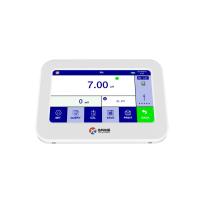
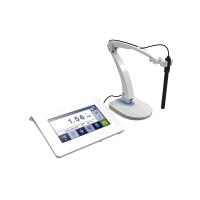
5. pH value: the test needs to be measured with a pH meter. If the sample is too thick to be tested directly, it can be diluted by adding an appropriate amount of distilled water, but the dilution ratio should be indicated. It can be obtained from the test that when the pH value of the latex colorant is in the range of 7.0~9.5, it is considered to be up to standard.
6. Color:
a. In the primary color test, if the visual method is used, the sample must meet the approximate standard to meet the standard; if the instrument method is used, the standard of ΔE≦2.0 is required to meet the standard.
b. In the dilute color test, if the visual method is used, the sample must meet the approximate standard to meet the standard; if the instrument method is used, the standard of ΔE≦1.0 is required to meet the standard.
c. In the white color paste test, the visual method needs to make the sample reach the approximate standard to be considered up to the standard; if the instrument method is used, the standard of ΔE≦1.0 is required to be considered up to the standard.
7. Relative tinting strength or relative scattering power: In the test, it needs to reach the standard of 100±5.0 to reach the standard.
8. Particle size distribution: In the test, the particle size distribution of the latex color paste must be within the range of ≦1.0/μm~3.0/μm to be considered up to standard.
9. Migration resistance: In the test, the particle size distribution of the latex color paste must be within the range of ΔE≦5.0 to be considered up to the standard.