Synthetic resin emulsion interior wall paint is based on synthetic resin emulsion, formulated with pigments, body pigments and various additives. After application, it can form a smooth and thin coating for interior walls, including primers. and top coat.
Today we will introduce the requirements of the GB/T 9756-2018 standard for the preparation of primers and topcoats for synthetic resin emulsion interior wall coatings. Before testing, we need to divide the synthetic resin emulsion interior wall paint into primer and topcoat. Topcoats are divided into three grades: qualified products, first-class products and excellent products according to the requirements of use.
Item detection
Primer Board Requirements
The board is made by brushing method. For each sample, first measure the density D and the brushing quality.
1. Drying time: Choose a 150X70X(4~6)mm asbestos-free fiber cement slab, brush the amount of 80μm, and observe whether there is any sickness in the coating film within the specified time, if not, it is considered to be up to the standard.
2. Constructability and coating appearance: Choose a 430X150X(4~6)mm asbestos-free fiber cement slab, if "there is no barrier to brushing" and "the coating appearance is normal", it is considered to meet the standard.
3. Low-temperature film-forming properties: select a 200X150X6mm asbestos-free fiber cement plate for testing, and observe the test results visually. If the sample is dry, without cracking, blooming, and significant shrinkage, it can be rated as "5°C Cheng Membrane unremarkable".
4. Alkali resistance: Three 150X70X(4~6)mm asbestos-free fiber cement slabs are selected for testing, the brushing amount is 80μm, and the curing period is 7d. If the coating has no bubbling, powder falling and other coating film pathological phenomena, it can be rated as "no abnormality", and it is regarded as up to standard.
5. Pan-alkaline resistance: Five pieces of asbestos-free fiber-reinforced cement medium-density boards of 150X70X6mm were selected for testing, the brushing amount was 80 μm, and the curing period was 7 days.

Topcoat board requirements
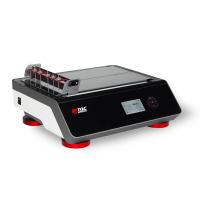
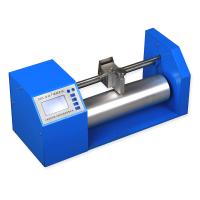
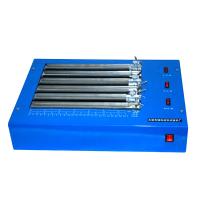
In addition to the items of construction, low-temperature film-forming properties, and coating appearance, the other items of the topcoat that need to be inspected by panel making are all panel-made by wire Bar Coaters made of stainless steel materials. There are three specifications of wire Bar Coater: 80, 100, 120, and their corresponding winding steel wire diameters are: 0.80mm, 1.00mm, 1.20mm.
1. Drying time: Select a 150X70X(4~6)mm asbestos-free fiber cement flat plate and a wire bar applicator with a specification of 100 for testing, and observe whether there is any sickness in the coating film within the specified time. If not, then It's up to the mark.
2. Constructability and coating appearance: Choose a 430X150X(4~6)mm asbestos-free fiber cement slab, if "there is no barrier to brushing" and "the coating appearance is normal", it is considered to meet the standard.
3. Low-temperature film-forming properties: select a 200X150X6mm asbestos-free fiber cement plate for testing, and observe the test results visually. If the sample is dry, without cracking, blooming, and significant shrinkage, it can be rated as "5°C Cheng Membrane unremarkable".
4. Contrast ratio: Use two polyester films (or cardboard) and a wire Bar Coater with a specification of 100 for testing, and the curing time is 1 day.
5. Alkali resistance: select three 150X70X (4~6) mm asbestos-free fiber cement flat plates for testing, use a wire rod coater with a specification of 120 for the first test, and use the specification for the second time after an interval of 6 hours The test was carried out for 80 wire Bar Coaters with a brush coating amount of 80 μm, and the curing period was 7 days. If the coating has no bubbling, powder falling and other coating film pathological phenomena, it can be rated as "no abnormality", and it is regarded as up to standard.
6. Scrub resistance: Two 430X150X6mm asbestos-free fiber cement slabs are selected for testing. The first time is tested with a wire Bar Coater with a specification of 120. After an interval of 6 hours, the second time is used with a specification of 80. The brushing amount is The 80μm wire Bar Coater is used for detection, and the curing period is 7d.