Standard coil coatings have excellent film flexibility and weatherability. Liquid organic coatings that can be applied to architectural metal panels by continuous roll coating. Liquid organic coatings coated on metal plates for other purposes (such as household appliances, etc.) can be used with reference.
Today we will introduce the regulations of HG/T 3830-2006 on standard coil coatings. Before testing, we need to understand the classification of standard coil coatings. We divide them into primers, back coats, and top coats according to their functions. According to the durability requirements for the actual use of the color-coated panels for construction, the topcoats are divided into general-purpose and durable.
General-purpose products are suitable for general-purpose color-coated panels for interior and exterior buildings, such as ceiling panels, roof panels, wall panels for interior decoration, and exterior wall panels with low durability requirements; durable products are suitable for high-durability requirements. Color-coated panels for external use, such as doors and windows, exterior roof panels and wall panels, etc.
Item detection
1. State in the container: First, we open the container, stir with a spatula or stir bar, and allow precipitation at the bottom of the container. If the primer sample, the back paint sample and the top paint sample are easy to mix evenly after stirring, it is rated as "uniform without hard lumps after stirring".
2. Viscosity: Use Tu-4 cup for testing, and the testing standard is determined by both parties according to actual requirements.
3. Mass solid content: If the primer sample is ≥ 45%, the back paint sample is ≥ 55%, the light paint sample is ≥ 60%, the dark paint ≥ 50%, and the flash paint ≥ 45%, it can be regarded as up to the standard.
4. Volume solid content: If the primer sample is ≥25%, the back paint sample is ≥35%, the light paint sample is ≥40%, the dark paint is ≥35%, and the flash paint is ≥35%, it can be regarded as up to the standard.
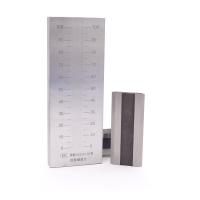
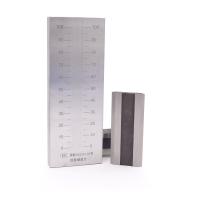
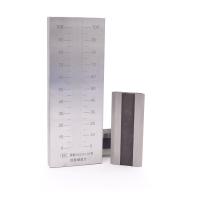
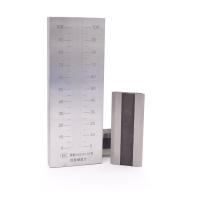
5. Fineness: If the fineness of the primer sample, back paint sample and top paint sample is ≤25μm, it is regarded as up to standard.
6. Appearance of coating film: Visually observe the test sample under scattered sunlight. If the coating film has uniform color, smooth surface, no bubbles, shrinkage cavities and other coating film pathological phenomena, it is rated as "normal".
7. Solvent resistance: the number of wipes for the back paint sample must be ≥ 50 times, and the number of wipes for the top coat sample must be ≥ 100 times, of which the flash paint ≥ 50 times is sufficient.
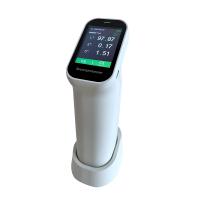
8. Coating color difference: use a color difference meter to detect and compare with the reference sample.
9. Gloss: The testing standard is determined by both parties according to actual requirements.
10. Pencil hardness: Use Zhonghua 101 drawing pencil for testing. The pencil hardness of the back paint sample must be ≥ 2H, and the pencil hardness of the top paint sample must be ≥ H to be considered up to the standard.
11. Reverse impact: the back paint sample ≥ 60kg*cm, the top paint sample ≥ 90kg*cm, it is considered to be up to the standard.
12. T-bend: If the minimum T-bend value of the back paint sample without coating film peeling off is 5/T, and the minimum T-bend value of the top paint sample without coating film peeling off is 3/T, then the standard is met.
13. Cupping: If the back paint sample is ≥ 4.0mm and the top paint sample is ≥ 6.0mm, it is considered up to standard.
14. Cross-cut adhesion: The cross-cut adhesion is tested at a distance of 1 mm. The cross-cut adhesion of the back paint sample and the top paint sample is 0, and the top paint sample
15. Scratch resistance: If the topcoat sample can withstand the scratch test of 1200g, the topcoat sample
16. Acid resistance: If the topcoat sample is immersed in the test solution for 15 minutes, rinse it with running tap water after the end, and observe it visually under scattered light. If there is no abnormality of the coating film, it can be rated as "no change".
17. Resistance to neutral salt spray: Immerse the general-purpose topcoat sample in the test solution for 480 hours, allow slight discoloration, blistering, and no other pathological phenomena of the paint film, grade ≤ 2 (S3); immerse the durable topcoat sample in 720 in the test solution, slight discoloration and foaming are allowed, and there is no other pathological phenomenon of the paint film. If the grade is ≤2 (S3), it is regarded as up to the standard.
18. Artificial aging resistance: Expose the general-purpose topcoat sample to fluorescent ultraviolet UVA-340 for 600 hours, and the durable topcoat sample to fluorescent ultraviolet UVA-340 for 960 hours. It is required that there is no rust, foaming, cracking, and discoloration≤ Grade 2, pulverization ≤ grade 1;
Expose the general-purpose topcoat sample to fluorescent ultraviolet UVB-313 for 400 hours, and the durable topcoat sample to fluorescent ultraviolet UVB-313 for 600 hours. It is required that there is no rust, foaming, cracking, and discoloration≤2 grades, powdering≤ Level 1;
Expose the general-purpose topcoat sample to the xenon lamp for 800 hours, and the durable topcoat sample to the xenon lamp for 1500 hours. It is required that there is no rust, foaming, cracking, and the discoloration and loss of light are ≤ 2 grades, and the pulverization is ≤ 1 grade. Up to standard.