The coating that uses amino resin and alkyd resin as the film is called amino alkyd resin coating. Today, let’s introduce the regulations of GB/T 25249-2010 on amino alkyd resin coatings. It should be noted that this standard does not apply to amino drying insulating coatings. Before testing, we need to understand the classification of amino alkyd resin coatings, which are divided into two types: varnish and color paint. Colored paints are further divided into Type I and Type II; Type I is colored paints other than art paints such as hammer grain, and Type II is art paints such as hammer grain. Type I is divided into two types: outdoor use and indoor use according to different application occasions.
Item detection
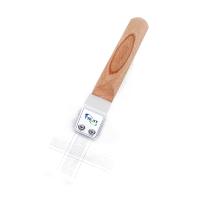
1. State in the container: First, we open the container and stir with a spatula or a stir bar. If the sample is in a uniform state without hard lumps after being stirred and mixed, it is regarded as up to standard.
2. Original paint color: The color number of the varnish sample must be ≤6 to be considered up to the standard.
3. Outflow time: use ISO6 cup, if the outflow time of the varnish sample is ≥ 30s, it is regarded as up to standard.
4. Non-volatile matter content: the color paint sample must be ≥ 47% to be considered up to the standard.
5. Hiding power: The white hiding power of the type I paint sample must be ≤110g/m², and the black hiding power must be ≤40g/m² to meet the standard.
6. Storage stability: If the sample can be stored at (50±2)°C for 72 hours without deterioration, it is regarded as meeting the standard.
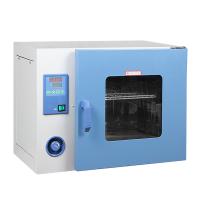
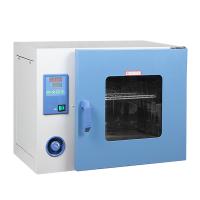
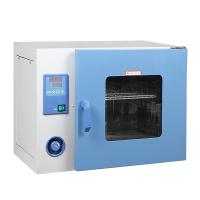
7. Drying time: bake at the agreed temperature and time, if it can be dried, it can be rated as "passed"
8. Appearance of paint film: Use visual inspection method to observe the model under natural sunlight. If there is no orange peel, wrinkle, stain, shrinkage cavity and other phenomena on the surface, it can be rated as "normal".
9. Cross-cut test: varnish samples and paint type I samples must be ≤ grade 1 to be considered up to the standard.
10. Impact resistance: If the test result is that the varnish sample is 50cm, and the color paint is ≥40cm, it is considered to be up to the standard.
11. Pencil hardness: Use Zhonghua brand 101 drawing pencil to test, and evaluate whether the pencil scratches the paint film. If the sample ≥ HB, it is regarded as up to standard.
12. The bending test needs to be ≤3mm to meet the standard.
13. Heat resistance: Place the paint sample in an environment of (150±2)°C for 1.5 hours, allowing slight discoloration and loss of gloss. If it can pass the 10mm bending test, it is considered up to the standard.
14. Bleeding: Spray a similar white amino alkyd resin paint on the paint film, and let it dry for 1 hour. Use the visual inspection method to test whether the sample seeps into the white paint film and cause color change under natural sunlight. If there is no such phenomenon, it can be rated as "no bleeding".
15. Water resistance: Soak the varnish sample and type I paint sample in the third-grade water for 24 hours, if at least 2 of the 3 test panels have no coating film pathology such as blistering, cracking, peeling, obvious discoloration and obvious loss of light If there is no phenomenon, it can be rated as "no abnormality".
16. Alkali resistance: soak the type I indoor sample in 5% Na2CO3 solution for 24 hours, if at least 2 of the 3 test panels do not show blistering, cracking, peeling, obvious discoloration and obvious loss of gloss, etc. If there is no membrane pathology, it can be rated as "no abnormality".
17. Acid resistance: soak the outdoor sample of type I paint in 10% H2SO4 solution for 5 hours, if at least 2 of the 3 test panels do not have blistering, cracking, peeling, obvious discoloration and obvious loss of gloss, etc. If there is no phenomenon, it can be rated as "no abnormality".
18. Volatile oil resistance: Soak the varnish sample in No. 13 ordinary paint and solvent oil for cleaning for 48 hours, if at least 2 of the 3 test panels do not show foaming, cracking, peeling, obvious discoloration and obvious loss of light, etc. If the coating film is pathological, it can be rated as "no abnormality"; soak the Type I paint sample in No. 13 ordinary paint and solvent oil for cleaning for 24 hours, if at least 2 of the 3 test panels do not have blisters, Cracking, peeling, obvious discoloration and obvious loss of gloss and other abnormalities of the coating film can be rated as "no abnormality".
19. Resistance to artificial weathering: 350h of artificial weathering test is carried out on outdoor samples of type I paint, and there is no abnormal phenomenon of coating film such as blistering and cracking in the screen recording, and the discoloration is ≤ 2 grades, and the loss of light is ≤ 2 grades. It's up to the mark.