The main methods for evaluating the quality of chemical conversion coatings through experiments are:
(1) Microscopy
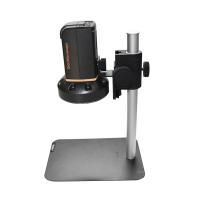
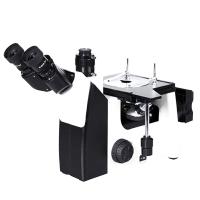
The microscope method is to magnify the chemical conversion coating to 100-1000 times with a metallographic microscope or an electron microscope , and observe its microstructure such as crystal shape, size and arrangement. The crystal shape is preferably columnar crystal, and the crystal size is preferably smaller, generally controlled below tens of microns, the more uniform the arrangement, the smaller the porosity, the better.
(2) Thickness (or weight) measurement method
Immerse the sample in chromic acid solution at 75C, mass fraction according to the national standard for 10 to 15 minutes to remove the chemical film, and then remove the weight difference before and after the film layer to obtain the film weight.
(3) Determination of corrosion performance
Corrosion performance measurement is commonly used in accordance with the provisions of the national standard GB 6807- -86 . It can be impregnated with 3% sodium chloride aqueous solution at 15-25C, or dripped with copper sulfate solution. The formula of as follows: CuSO , .5H2O 41g/L, NaCl 35g/L, HCI 13mL/L. It can also be assessed by salt spray test, heat resistance test or cycle test after coating .
(4) Impact test method
It is often measured together after painting. When the impact test is carried out on the coated phosphating plate with a load of 49N/cm, when the impact point on the back of the impacted sample does not produce radioactive cracks, the chemical conversion coating can be determined. The quality is better.
(5) Secondary adhesion determination method
The adhesion measured after the chemical conversion coating is applied is the primary adhesion. The adhesion measured after carrying out the temperature-resistant water test under certain conditions is called the secondary adhesion. Generally, the cross -cut method is used to measure the adhesion on the sample plate after the water resistance test , and the peeling level of the coating film is observed after the tape is peeled off. Generally, it is a parallel comparison experiment.
(6) Measuring method of film porosity
Take 14% NaCl and 3% potassium ferricyanide solution, the mass fraction of surfactant is 0.1% distilled aqueous solution, store it in a brown bottle for 24h, and filter it with filter paper. When in use, cut the filter paper into paper pieces whose length and width are 2.5cm, immerse the paper pieces in the above-mentioned solution with plastic tweezers, put out dripping excess test solution, and cover it on the surface of the chemical film to be tested, after a period of time ( After 1min), remove the test paper and observe the surface of the film layer. The blue spots indicate the part with holes.
(7) Alkali resistance of chemical film
The chemical film is immersed in 0.1mol/L sodium hydroxide lye, the temperature is 25°C, and the quality difference before and after 5min is compared, the amount of dissolution of the chemical film in the lye can be obtained.
(8) Acid resistance of chemical conversion coating
The acid resistance of the chemical conversion film is evaluated by comparing the dissolved amount of the chemical conversion film in the acid solution with a pH value of 2 .
(9) P ratio of chemical conversion coating
The P ratio is initially defined as P/(P+H), where P is dizinc iron phosphate, and H is zinc phosphate , so the level of P ratio indicates the proportion of dizinc iron phosphate in the chemical conversion coating. The chemical conversion coating with a high P ratio is not easy to lose water and rehydrate its crystal water, and its corrosion resistance is better than that of a low P ratio chemical conversion coating.