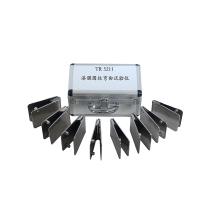
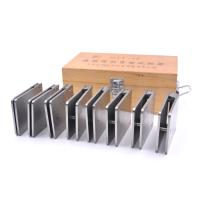
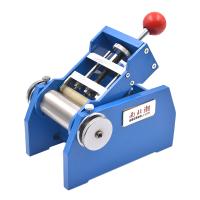
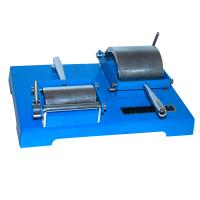
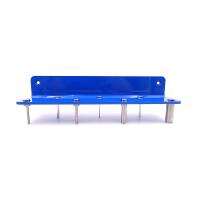
Standard tinplate can be used before the test of iron printing ink, and the ink is evenly scraped with a wire rod, and it is to be tested after it is dry. The test of flexibility adopts the shaft bending Tester. This Tester is generally equipped with 6 different cross-section and radius of curvature specifications. The length of each shaft is 35 cm. For specific specifications, please refer to the detailed product parameters of NBCHAO. By bending the tinplate test plate on different shafts and finding the minimum diameter of the shaft that does not cause damage to the ink film layer, the flexibility of the ink can be expressed.
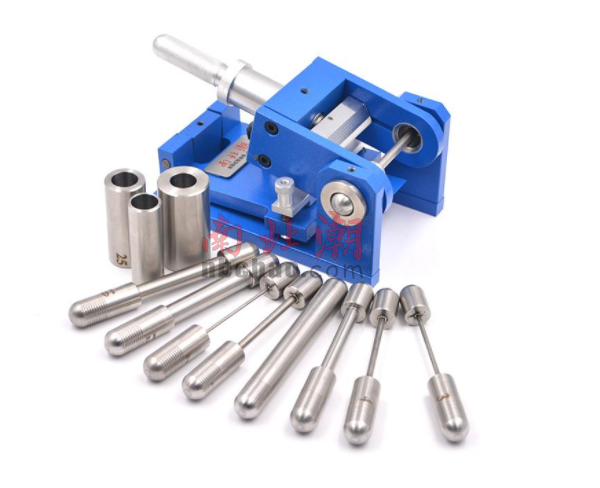
The test conditions should be carried out at a temperature of 25±1°C and a humidity of 65%±5%. It is worth noting that the ink-coated side should face up, and don’t reverse it. At the same time, the bending action of a single shaft rod needs to be completed within 2-4 seconds. In addition, all tinplate is not only the size and thickness of the iron plate To be consistent, the thickness of the ink should also be consistent. In this regard, you can use a wire rod with the same film thickness specification in the north and south tides to apply ink, and observe the bent tinplate ink layer with a 4 times magnifying glass. If there are lines, cracks or peeling off If it is damaged, it means that the curved ink layer under the shaft rod of this specification is unqualified. This method is applicable to lithographic iron inks and related primers and varnishes.