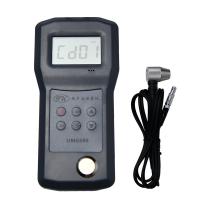
Coating film thickness is an important variable affecting product quality, process control and cost control. Measurement of film thickness can be accomplished with many different instruments. Understanding the equipment available for film thickness measurement and how to use it is useful for every coating operation.
Issues in determining which method is appropriate for a given coating measurement include the type of coating, substrate material, range of coating thicknesses, size and shape of the part, and equipment cost. Commonly used measurement techniques for cured organic films include non-destructive dry film methods such as magnetic force, eddy current, ultrasonic or micron measurement, and destructive dry film methods such as using microscopic methods such as ASTM B487-20 or gravimetric (mass) measurement carry out testing.
Powder and liquid coatings also have methods for measuring thin films before curing.
Magnetic Film Thickness Gauge
Magnetic thin film gauges are used for non-destructive measurement of the thickness of non-magnetic coatings on ferrous substrates. Most coatings on steel and iron are measured in this way. Magnetic meters use one of two operating principles: magnetic pull-off or magnetic/electromagnetic induction.
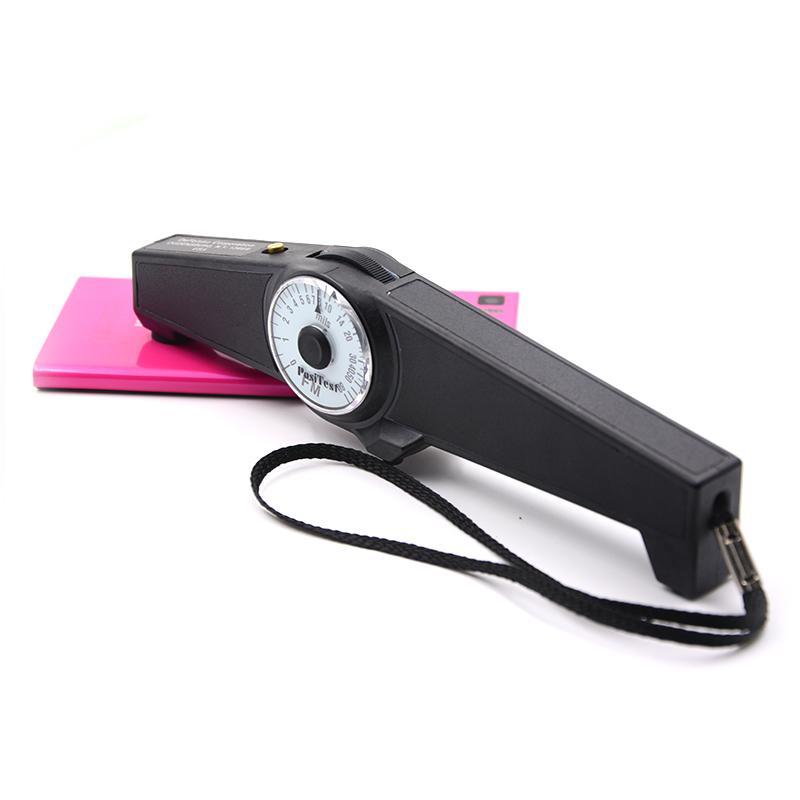
Magnetic pull-off Thickness Gauge
A magnetic tension gauge uses a permanent magnet, a calibration spring, and a scale. The attractive force between the magnet and the magnet pulls the two together. Pulling the magnets apart becomes easier as the thickness of the coating separating the two increases. Coating thickness is determined by measuring this pull-off force. Thinner coatings will have stronger magnetic attraction, while thicker films will have relatively less magnetic attraction. Testing with a magnetometer is sensitive to surface roughness, curvature, substrate thickness, and composition of the test material.
Magnetic tension gauges are robust, simple, inexpensive, portable, and usually do not require any calibration adjustments. They are a good low-cost alternative where quality targets require only a few readings during production.
Rally gauges are usually pencil or roll back dial models. The pencil gauge model (Figure 1) uses a magnet mounted on a coil spring that operates perpendicular to the coated surface. Most pencil gauges have large magnets designed to only work in one or two positions, which partially compensates for gravity. More accurate versions use tiny, accurate magnets to take measurements on small, hard-to-reach surfaces. Triple indicators ensure accurate measurements with a tolerance of ±10% when the meter is pointing down, up, or level.
The rollback dial model (Figure 2) is a common form of magnetic pull-off gauge. A magnet is attached to one end of a rotating balance arm, which is connected to a calibrated hairspring. By rotating the dial with your finger, the spring increases the force on the magnet and pulls it away from the face. These gauges are easy to use and have counterbalanced arms that allow them to work in any position, independent of gravity. They are safe in explosive environments and are commonly used by painting contractors and small powder coating operations. Typical tolerance is ±5%.
Magnetic and Electromagnetic Induction Instruments
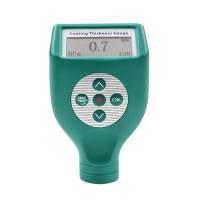
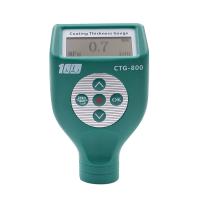
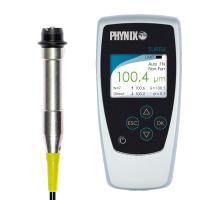
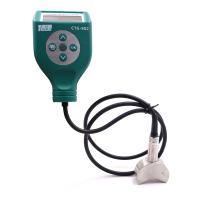
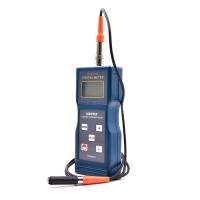
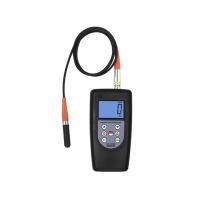
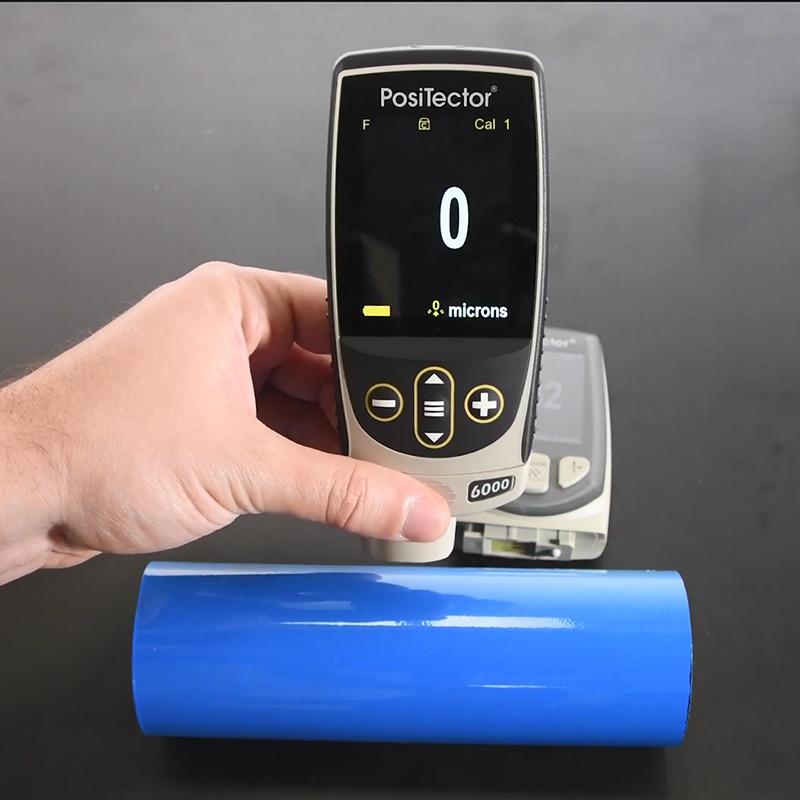
Magnetic induction instruments (Figure 3) use permanent magnets as the source of the magnetic field. Hall effect generators or magnetoresistors are used to sense the magnetic flux density at the poles of a magnet. Electromagnetic induction instruments use an alternating magnetic field. A soft ferromagnetic bar wound with a coil of thin wire is used to generate the magnetic field. The second coil is used to detect changes in magnetic flux.

These electronic instruments measure the change in magnetic flux density at the steel surface as a magnetic probe approaches it. The magnitude of the flux density on the probe surface is directly related to the distance from the steel substrate. By measuring the flux density, the coating thickness can be determined.
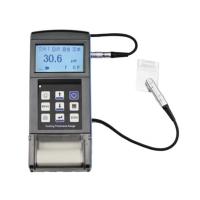
Electronic magnetometers come in many shapes and sizes. They typically use constant pressure probes to give consistent readings regardless of different operators. The reading is displayed on a liquid crystal display (LCD). They can choose to store measurements, perform instant analysis of the readings, and output the results to a printer or computer for further review. Typical tolerance is ±1%.
Manufacturer's instructions should be followed carefully for accurate results. Standard test methods are provided in ASTM D7091, ISO 2178 and ISO 2808.
Eddy Current Thickness Gauge
The eddy current technique is used for non-destructive measurement of the thickness of non-conductive coatings on non-ferrous substrates. A thin wire coil conducting high frequency alternating current (above 1 MHz) is used to create an alternating magnetic field on the surface of the instrument probe. When the probe is brought close to a conductive surface, the alternating magnetic field will generate eddy currents on the surface. Substrate properties and the distance of the probe from the substrate (coating thickness) affect the magnitude of the eddy currents. The eddy currents create their own opposing electromagnetic field, which can be sensed by the field coil or an adjacent second coil. (For more information on eddy current testing, see the article CUI Inspection Techniques for Process Piping Part 2.)
涡流涂层测厚仪的外观和操作类似于电子磁性测量仪。它们用于测量所有有色金属的涂层厚度。与磁性电子仪表一样,它们通常使用恒压探头并在 LCD 上显示结果。他们还可以选择存储测量结果或对读数进行即时分析并输出到打印机或计算机以供进一步检查。典型容差为 ±1%。测试对表面粗糙度、曲率、基材厚度、金属基材类型和与边缘的距离很敏感。
ASTM B244和ISO 2360中提供了该测试的应用和性能的标准方法。
现在,仪表将磁原理和涡流原理结合到一个单元中是很常见的。有些通过According to基材自动从一种操作原理切换到另一种操作原理来简化测量任何金属上的大多数涂层的任务。这些组合单元深受画家和粉末涂料师的欢迎。
超声波测厚仪
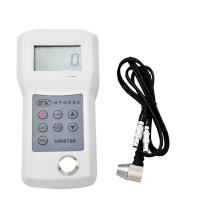
超声波测厚仪的超声波脉冲回波技术用于在不损坏涂层的情况下测量非金属基材(塑料、木材等)上涂层的厚度。
仪器的探头包含一个超声波换能器,它通过涂层发送脉冲。脉冲从基板反射回换能器并转换为高频电信号。回波波形被数字化和分析以确定涂层厚度。在某些情况下,可以测量多层系统中的各个层。
该器件的典型容差为 ±3%。ASTM D6132中提供了该测试的应用和性能的标准方法。
千分尺测厚仪
千分尺有时用于检查涂层厚度。它们具有测量任何涂层/基材组合的优点,但缺点是需要接触裸露的基材。接触涂层表面和基材底面的要求可能会受到限制,而且它们通常不够灵敏,无法测量薄涂层。
需要进行两次测量:一次有涂层,另一次没有。两个读数之间的差异,即高度变化,被认为是涂层厚度。在粗糙表面上,千分尺测量最高峰值以上的涂层厚度。
破坏性测试
一种破坏性厚度技术是在横截面上切割涂层部分,并通过使用光学显微镜观察切口来测量薄膜厚度。另一种横截面技术使用比例显微镜通过干膜涂层观察几何切口。精密切割轮用于制作穿过涂层并进入基材的小而准确的 V 形槽。可提供配备切割尖端和照明放大镜的量规。
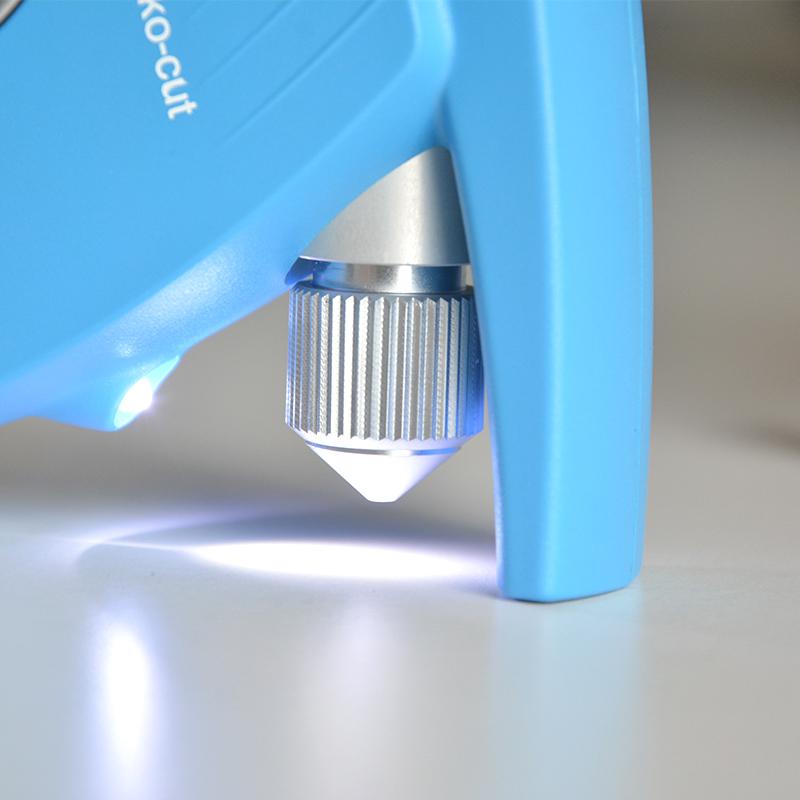
虽然这种破坏性方法的原理很容易理解,但仍有测量误差的机会。准备样品和解释结果需要技巧。将测量标线调整到锯齿状或模糊的界面可能会产生不准确,尤其是在不同操作员之间。当无法使用廉价的非破坏性方法或作为确认非破坏性结果的一种方式时,使用此方法。ASTM D4138概述了该测量系统的标准方法。
X射线荧光法
X 射线荧光是一种非破坏性和非接触式方法,用于确定层厚度并According to DIN 到 DIN EN ISO 3497 对金属涂层材料进行材料分析。该方法可以定义层厚度和各个层的成分,多层和合金层。
重量式测厚仪
通过测量涂层的质量和面积,可以确定厚度。简单的方法是在涂层前后对零件进行称重。确定质量和面积后,使用以下公式计算厚度:
T = (mx 10) / (A xd)
其中 T 是以微米为单位的厚度,m 是以毫克为单位的涂层质量,A 是以平方厘米为单位的测试面积,d 是以克每立方厘米为单位的密度。
当基材粗糙或涂层不均匀时,很难将涂层的质量与厚度联系起来。实验室很有能力处理这种耗时且通常具有破坏性的方法。
固化前的厚度测量
湿膜厚度 (WFT) 测量仪有助于确定需要多少湿材料才能达到指定的干膜厚度,前提是已知固体的体积百分比。它们测量所有类型的湿有机涂层,例如平坦或弯曲光滑表面上的油漆、清漆和清漆。
在应用过程中测量湿膜厚度表明需要由应用程序立即校正和调整。在薄膜干燥或化学固化后对其进行修正需要耗费大量额外的劳动时间,可能导致薄膜污染,并可能导致涂层附着力和涂层系统完整性问题。
确定正确的湿膜厚度 (WFT) 的公式,无论有没有稀释剂,如下所示:
没有稀释剂:
WFT =(所需干膜厚度)/(固体体积百分比)
用稀释剂:
WFT = (所需干膜厚度 / 固体体积百分比) / (100% + 添加的稀释剂百分比)
Wet film is often measured using a wet film comb or wheel. A wet film comb is a flat aluminum, plastic or stainless steel plate with alignment notches on the edge of each face. Place the gauge flat and firmly on the surface to be measured immediately after the coating is applied, then remove it. The wet film thickness is between the highest coated notch and the next uncoated notch. Notch gauge measurements are neither accurate nor sensitive, but they can be used to determine the approximate wet film thickness of coatings on items whose size and shape prohibit the use of more accurate methods. (See ASTM D1212.)
Gauges are applied to smooth surfaces, free of irregularities, and should be used along the length rather than the width of the surface. Using a wet film gauge on fast drying coatings will give inaccurate measurements. ASTM D4414 outlines the standard method for measuring wet film thickness with a notch gauge.
Wet film wheels (eccentric rolls) use three discs. The gauge is rolled in the wet film until the center disc touches the wet film. The point where it touches provides the wet film thickness. Powder coatings can be measured with a simple hand-held comb or ultrasonic gauge prior to curing. Uncured powder film combs work in much the same way as wet film gauges. The comb was dragged through the powder film, the thickness of which was between the highest numbered tooth that was marked and had powder attached to it, and the next highest tooth that was not marked and had no powder attached to it. These gauges are relatively inexpensive and have an accuracy of ±5 mm. They are suitable as a guide only as the cured film may vary after flow. Marks left by the gauge may affect the properties of the cured film.
Ultrasonic equipment can be used non-destructively on uncured powder on smooth metal surfaces to predict the thickness of the cured film. The probe is positioned very close to the surface to be measured and the reading is displayed on the device's LCD. The measurement uncertainty is ±5 mm.
Coating Thickness Standard
Coating Thickness Gauges are calibrated against known thickness standards. Thickness standards come from many sources, but it is advisable to ensure they are traceable to national measurement agencies such as NIST (National Institute of Standards and Technology). It is also important that the verification standards are at least four times the size of the gauge they will be used to calibrate. Periodic inspections against these standards verify that the meter is functioning properly. When readings do not meet the meter's accuracy specifications, the meter needs to be adjusted or repaired and then recalibrated.
summarize
Film thickness in a coating can have a big impact on cost and quality. The measurement of film thickness should be a routine activity for all coaters. Using the correct gauge depends on the thickness range of the coating, the shape and type of the substrate, the cost of the gauge, and the importance of obtaining an accurate measurement.