What is Surface Tension?
Surface tension is the force that causes molecules on the surface of a liquid to be pushed together and form a layer. It is the tension in the liquid surface film caused by the particles in the liquid surface layer being attracted by the bulk of the liquid, which tends to minimize the surface area.
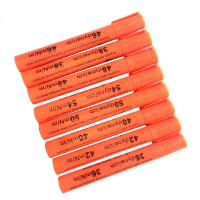
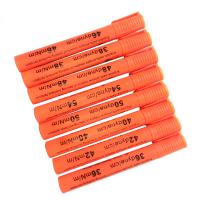
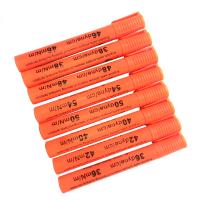
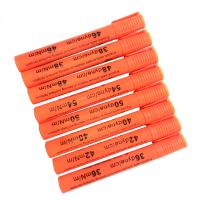
Surface tension has the dimensions force per unit length or energy per unit area. It is usually measured in units of dynes/cm, the dyne force required to break a film 1 cm in length.
Surface tension is a property of the surface of a liquid that makes it behave like a stretched elastic membrane. Its strength is determined by the attractive forces between the particles of the liquid itself and the particles of the gas, solid or liquid in contact with it. Surface tension is equal to the force per unit area required to expand the surface of a liquid. The cohesion between liquid molecules is responsible for a phenomenon known as surface tension.
Water has a high surface tension compared to most other liquids due to the relatively high attractive forces between water molecules. Because of this, certain insects are able to stand on the surface of water and can support a razor blade placed horizontally on the surface of the liquid, even though the blade may be denser than the liquid to float.
The surface tension of water decreases significantly with temperature. Surfactants (soaps and detergents) are also used to lower the surface tension of water. Surfactants are important corrosion inhibitors that are used in applications such as cooling towers and heat exchangers to reduce surface tension.
Surface tension can cause pitting. For example, a typical chromium bath has a surface tension between 75 and 90 dynes/cm. In some cases, this high surface tension is associated with pitting corrosion. The surface tension of the solution should be kept within the recommended range of 28 - 34 dynes/cm. This range prevents pitting corrosion caused by hydrogen gas generated from the cathode adhering to the deposit. The concentration of the wetting agent in the bath was determined by measuring the surface tension using a lithograph drop test.