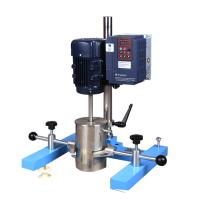
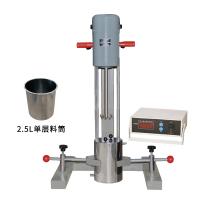
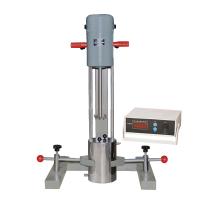
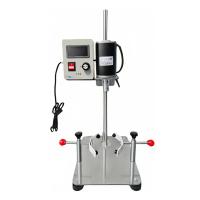
High shear disperser blades are available in a variety of styles and sizes (Figure 46.5). They generally fall into two categories: serrated and ringed. Both categories work well when used under proper operating conditions.
Open serrated blades are popular for their low cost, ease of cleaning, and versatility. It is available in a variety of tooth designs. As teeth increase in size and become more
The shape is aggressive and the pumping capacity of the vanes is increased. However, as pumping (turbulence) increases, shear decreases. High pumping saw blades still produce significant shear compared to low shear paddle agitators. This aspect is an important consideration when determining what the final product is to achieve.
Ring blades are powerful tools for optimizing disperser performance. They are more expensive to purchase and consume more horsepower than saw blades. It typically runs at higher tip speeds (5700+fpm) and acts more like a rotor stator. Rather than relying solely on the surface of the discs and the configuration of the serrations to achieve shear and flow, much of the ring blade's work is done hydraulically as centrifugal force forces the product between the contoured rings creating a velocity differential and high pressure area, then instantly Discharge to the low-pressure area outside the ring, resulting in membrane splitting Venturi effect. Additional heat is generated as a by-product of higher shear. In some cases, however, this higher level of shear eliminates or greatly reduces any subsequent milling that might have been required before.
How do I choose the right size blade for my disperser?
The size of the blades is based on the flow characteristics of the product and the degree of dispersion required. The thicker the product, the larger the blade diameter will need to be compared to the tank diameter.
Conversely, the thinner the product, the smaller the blade diameter needs to be compared to the tank diameter. This comparison is called the blade-to-tank ratio. Thick products such as heavy, flowable pastes may require a 1/2:1 ratio. Medium products like paint require a 1/3:1 ratio, while thin products like stains can use up to 1/8:1 ratio. For example, if the blade to tank ratio is 1/3:1 and the tank diameter is 6 feet, the blade diameter is 2 feet.