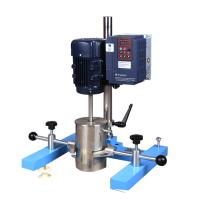
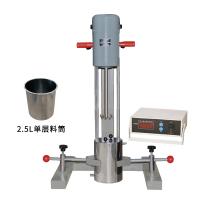
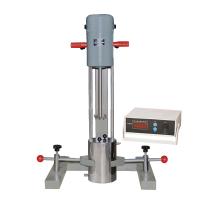
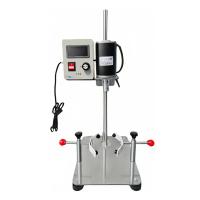
Dispersion machines work on the principle of energy transfer. Disk-type blades are mounted on the bottom end of the mixing shaft and rotate at relatively high tip speeds. (Tip speed is the speed of the outer tip or edge of the rotating disk. Typical tip speed for a disperser is measured in feet per minute and is calculated by multiplying the constant 3.14 by the diameter of the disk in feet times the revolutions per minute . mixing shaft. The industry term for tip speed is peripheral speed.) Solids and liquids are sucked into the rotating disk by the suction it creates. This suction often results in a visible swirl from the top of the mixture to the top of the disc. A similar vortex forms below the disc, extending from the bottom of the tank to the underside of the disc. The vortexes are actually two separate vortexes, although common industry convention refers to the visible upper vortex only.
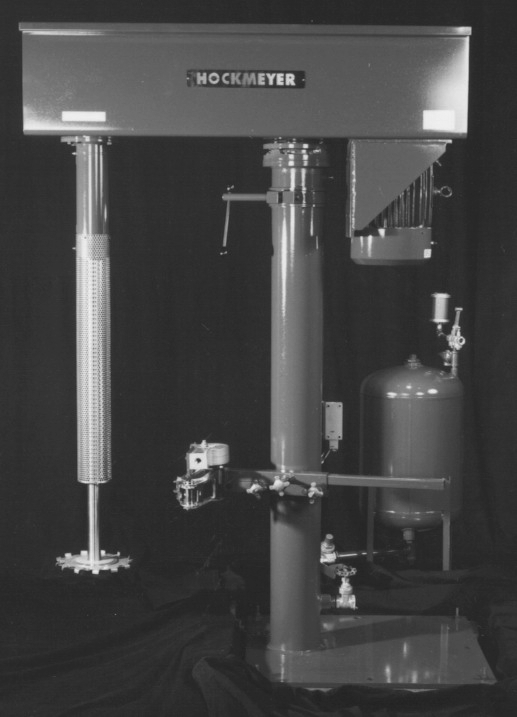
When the solid-liquid mixture enters the vortex and is sucked into the high-speed disc, energy (the horsepower used to drive the disc) is instantaneously transferred from the disc to the mixture.
This highly concentrated transfer of energy produces large instantaneous velocity changes in the mixture as it gradually contacts the disk. (Think of the mixture as a series of individual horizontal layers, going down from the top and up from the bottom to the surface of the rotating disk.) As each layer touches the disk, it accelerates instantaneously from the slow-moving vortex into the very disk high speed and protrudes outward from the disc and towards the tank wall. The rapid tearing of the layers of the mixture is shear, often called shear.