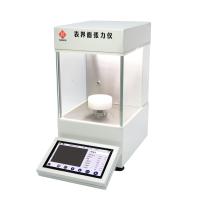
对流变学和表面化学这两门流体流动和固液相互作用的主要科学有基本的了解是理解涂层和印刷工艺和材料的必要条件。对这些主题的一般定性处理将足以提供使用和应用涂料和油墨所需的洞察力,并帮助解决与它们的使用相关的问题。
从最广泛的意义上说,流变学是对所有材料在压力下的物理行为的研究。四大类:弹性、塑性、刚性和粘性。我们关注的是液体和糊状物。流体流变学的范围包括施加和消除物理力时液体形状的变化。粘度是涂料和油墨的重要流变性能。粘度就是油墨流动的阻力-剪切应力与剪切速率的比值。在整个涂装和印刷过程中,施加各种类型和数量的机械力。剪切力的大小直接影响非牛顿流体的粘度值。大多数涂层在混合或在涂布机上工作时都会出现一定程度的“剪切变薄”现象。重墨特别容易剪切变稀。
随着剪切速率的增加,粘度在某些情况下会急剧下降。这看起来很简单,除了两个其他的影响。一个是屈服点。这是引起流动所需的剪切速率。除非施加一点额外的剪切力,否则番茄酱通常不会流动。然后它经常流动得太自由了。一旦超过屈服点,类固体的行为就消失了。松散的网络结构被打破。油墨也显示这种屈服点属性,但程度较低。
屈服点是油墨重要的性能之一。本文还将讨论液体的一个重要但经常被忽略的属性——屈服值。我们需要把流变学作为一个动态变量来研究,并探索它在整个涂层过程中的变化。涂覆过程改变粘度和流变性影响涂覆过程的相互作用将是我们讨论涂覆技术的一个关键概念。
第二个因素是时间依赖性。有些油墨即使在恒定的剪切速率下,粘度也会随时间变化。这意味着粘度取决于施加的机械力的大小和时间的长短。当剪切力消除后,油墨会恢复到初始粘度。回报率是油墨的另一个重要特性。从几秒到几小时不等。
Rheology goes well beyond the familiar snapshot view of viscosity at a single shear rate, which is often reported by ink suppliers. It handles changes in viscosity when varying degrees of force are applied, temperature changes, and solvents and additives come into play. Brookfield Viscometer readings, while valuable, do not give the full picture of non-Newtonian fluids. Surface chemistry describes wetting (and dewetting) phenomena due to mutual attraction between ink molecules and intramolecular attraction between ink and substrate surface. The relative strength of these molecular interactions determines several performance parameters of the ink. Good print definition, adhesion and a smooth ink surface all require the correct surface chemistry. Bubble formation and associated film-forming defects also have a basis in surface chemistry.
Surface chemistry, for our purposes, involves the attraction of liquid molecules to each other and to a substrate. We will focus on the wetting phenomenon and relate it to painting processes and issues. It can be seen that an understanding of wetting and dewetting will help clarify many of the anomalies seen in coatings and printing.
The two sciences of rheology and surface tension come together to provide the tools needed to handle increasingly complex coating technologies. There is a need to combine rheology and surface chemistry into a unified subject to better understand ink and screen printing processes. We will discuss this unification in a straightforward, semi-qualitative way. One benefit will be the discovery that printing and coating problems are often blamed on rheology, the basis of which is surface chemistry. We will further discover that coating leveling is influenced by both rheology and surface chemistry.