In terms of chemistry, one side of a paint bears considerable similarity to the other side of an adhesive or glue (Figure 6.1). Both materials come in the form of organic coatings. Adhesion is a desired property in both cases, although the emphasis on adhesion strength may vary depending on the application.
This coating is essentially a high-molecular polymer consisting of more or less cross-linked macromolecules and a certain amount of pigments and fillers. Metal, wood, plastic, paper, leather, concrete or masonry, these are just some of the important materials that can form the substrate of a coating.
However, it is important to remember that these substrates may inhibit higher rigidity than the coating. In this case, if the system is subjected to an external force of sufficient magnitude, fractures can occur within the coating. However, if the adhesion at the interface exceeds the adhesion of the paint layer, it will lead to bond failure. Otherwise the bond fails, indicating some separation between the coating and the substrate.
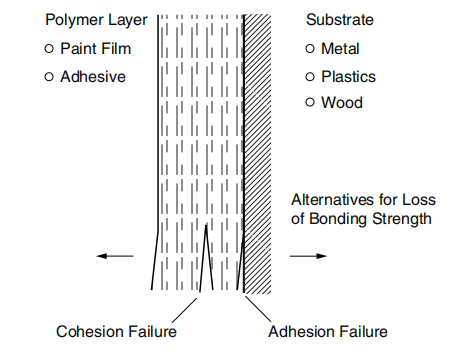
Figure 6.1 Adhesion between the polymer layer and the substrate interface
The energetic aspects at the interface and the influence of the inner elasticity of the coating and the substrate have been considered as a theoretical approach by which it is possible to predict where failure will occur.
Both types of adhesive damage are encountered in practice. The presence of cohesion will indicate the attainment of good adhesion strength. Further improvement of any system should be sought in the direction of increasing the inherent strength of the coating material.