In practice, coating failures are often caused not by simultaneous peeling over an extended area, but gradually, for example, from a barely covered edge, or from a linear damaged area. Therefore, it seems prudent to repeat these conditions during appropriate testing.
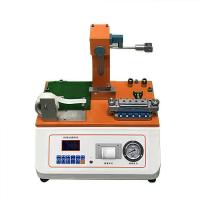
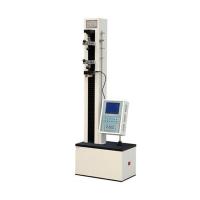
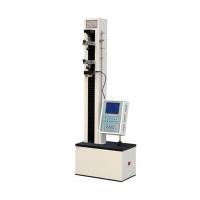
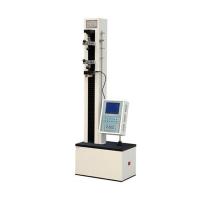
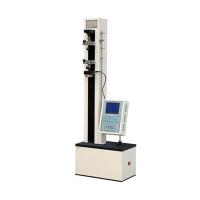
The peel test was originally developed for adhesive tapes, and its use seems natural and simple. However, in order to measure coating adhesion, it is necessary to first mark a sufficiently wide band on the sample with two parallel cuts of sufficient length. Analysis of the test conditions, shown in Figure 6.6, reveals the effect of the angle of loading. Thus, contrary to the first impression that the test procedure should be simple, the details of the separation process turned out to be quite complicated. Under the combined action of negative tensile stress and shear stress. In addition, the viscoelastic properties of the coating material need to be considered, which is also affected by the amount of pigmentation in the film. Due to the presence of viscoelasticity, the test results are largely dependent on the speed of the peeling process.
The general rule of thumb is therefore that the peel test can certainly be considered a practical method when used to measure the adhesion of paint films, but it is also understood that the results obtained cannot be explained by the adhesion mechanism.

Pull-off test for measurement of adhesion based on determination of blister dimensions and pressure