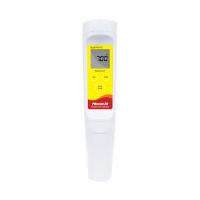
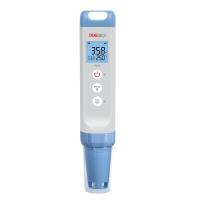
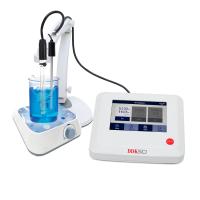
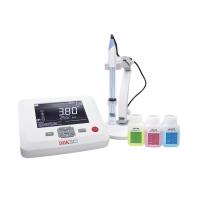
pH计是测量和反应溶液pH值的重要工具,pH电极通过配套pH计可以实现检测pH值和输出信号的功能。pH计有多种型号和产品。显示方式也分为指针显示和数字显示两种选择。但是,无论pH计的种类如何变化,其工作原理都是一样的。pH计的主体是一个精密电位器。pH计由参比电极、玻璃电极和自身组成。
pH计组件
1. 参考电极。参比电极的基本功能是保持一个恒定的电位,并将其用作测量各种偏差电位的控制。银-氧化银电极是pH计中常用的参比电极。
2. 玻璃电极。它的电位取决于周围溶液的 pH 值。玻璃电极的作用是According to被测溶液中氢离子活性的变化建立电位差。如果将 pH 敏感电极和参比电极置于同一溶液中,则形成原电池。电池的电位是玻璃电极和参比电极电位的代数和,即E电池E参比+E玻璃。如果温度恒定,则电池的电位会随着待测溶液的 pH 值而变化。但是,很难测量电池在pH 电极中产生的电势,因为电动势很小,电路的阻抗很大1-100MQ。因此,需要放大信号以使其足以驱动标准毫伏表或毫安表。
3. pH计。它可以测量具有极高电阻的电路中的微小电位差。pH计的作用是将原电池的电位放大数倍。放大后的信号将由电表显示,电表指针的偏转程度表示其驱动的信号强度。为了操作需要,pH计的表盘上刻有相应的pH值,数字pH计直接以数字显示pH值。

pH计是如何工作的?
pH计采用电位法测量溶液的pH值。因此,pH计的工作方式除了可以测量溶液的pH值外,还可以测量电池的电动势。PH是物质中氢离子的活度,PH是氢离子浓度的对数的负数。
The main measuring parts are glass electrode and reference electrode. The glass electrode is pH sensitive, while the reference electrode is potential stable. Placing the two electrodes of a pH meter in the same solution will together form a galvanic cell. The potential of the galvanic cell is the algebraic sum of the potentials of the glass electrode and the reference electrode. The pH detected by the electrodes needs to be sent to the pH meter, which stores, displays the data and informs the rest of the system. After adjusting the pH value, it is detected by the pH electrode, and then the pH meter can be compared to readjust the data.
The reference electrode potential of the pH electrode is stable. When the temperature is kept stable, the potential change of the galvanic cell consisting of the solution and the electrode is only related to the potential of the glass electrode. The potential of the glass electrode depends on the pH value of the solution to be measured, so only by measuring the change in potential can the pH value of the pH solution be obtained.