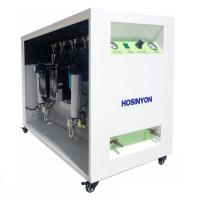
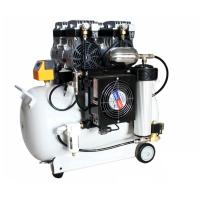
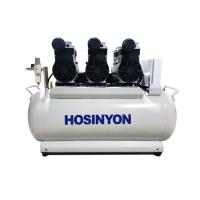
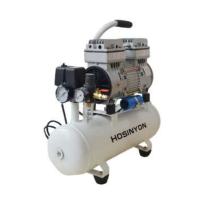
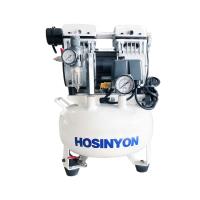
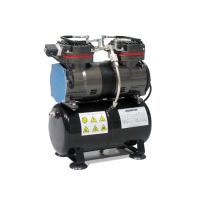
Air Compressor is a kind of compressed gas equipment, which is suitable for various processes of industrial production. As an important industrial equipment, the Air Compressor provides a source of pneumatic power and is the core equipment of the pneumatic system. It converts the mechanical energy of power into gas pressure energy, and is a kind of air pressure generating device for compressing air. However, if there are some problems with the Air Compressor, how should we find and solve them?
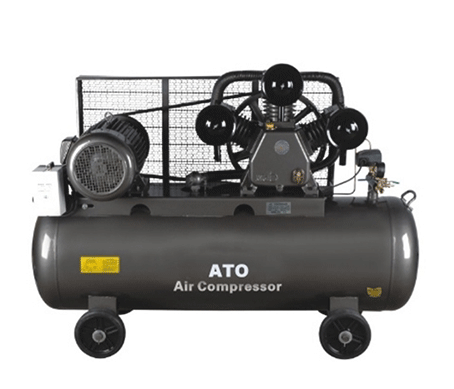
Air Compressor troubleshooting is as follows:
1. Oil leakage fault
During the daily operation of the Air Compressor, oil leakage often occurs due to the overflow of lubricating oil.
cause of issue
Leakage due to missing or defective oil seal. 10 hp belt driven Air Compressor
The main shaft is loose and the oil seal leaks.
The surface of the joint is leaking and the oil pipe joint is loose.
The belt is installed too tight causing the main bearing bush to wear out.
Casting or machining defects lead to oil leakage failures.
Fault diagnosis and solution
Check the oil seal for cracks, inner lip cracks and flanges. If one of the above conditions occurs, the oil seal needs to be replaced. Check the joint surface of the oil seal and the main shaft to judge whether there are scratches and defects. If there are scratches and defects, the mating surfaces need to be replaced. Check the oil return to make sure it is unobstructed and free from twists and bends. Check the size of the oil seal and Air Compressor box, if it is not suitable, it needs to be replaced.
Turn the spindle to check whether the radial clearance is too large. If the gap is too large, the bearing bush and oil seal should be replaced at the same time.
Check the seal of the gasket and repair and replace it in time. Inlet and return fitting bolts and boxer screw threads are fully tightened.
Readjust the belt tightness.
Repair or replace parts that cause casting or machining defects.
2. Overheating failure
The Air Compressor has been overloaded for a long time, resulting in overheating failure. The overheating fault phenomenon indicates that the exhaust temperature of the Air Compressor is too high, and the operating part generates heat.
cause of issue
Pressure relief valve or unloading valve not working.
The air cut-off system leaks seriously.
Insufficient oil in the operating part, pulling the cylinder.
Fault diagnosis and solution
Inspect the components of the relief valve when using air relief. And check whether the unloading valve is blocked or stuck when reducing unloading. Cleaning stuck parts and replacing failed parts can effectively eliminate overheating failures.
Check brake system parts and wiring.
The piston and cylinder liner are insufficiently lubricated, the gap is too small or the cylinder is pulled, causing overheating. The solution is to repair or replace the faulty part.
3. Abnormal noise
When the Air Compressor is used for a long time, there are always abnormal noises, such as metal impact, even knocking, friction and so on.
cause of issue
The connecting rod bearing bushes and bearing bushes are severely worn, and the connecting rod bolts are loose, causing knocking sounds.
The belt is loose, and the grooves of the active and passive belts are inconsistent, causing slippage.
The Air Compressor does not supply oil immediately after running, causing metal friction.
Fixing bolts are not tightened.
The gear nut is loose, causing excessive backlash.
Foreign matter in piston.
Fault diagnosis and solution
Check the connecting rod bearing shell, connecting rod bushing and main bearing for wear, strain or burnt, and whether the connecting rod bolts are loose. Determine whether the main oil passage is unblocked. Replacement of worn or contaminated conrod bearing shells, conrod bushings and main bearings is recommended. The connecting rod bolts should be tightened. And clear the main oil gallery.
Replace the active and passive belts with inconsistent grooves, and adjust the belt tightness.
If the oil injection pressure is not enough, please adjust the oil injection pressure. Clean up the clogged oil pipe and replace the faulty oil pipe. Check the oil quality and impurity content of lubricating oil, and compare with the standard. If it exceeds the standard, it should be replaced immediately.
Loose fastening bolts can reduce abnormal noise.
Gear-driven Air Compressors should be checked for loose gears and mismatched gears.
Remove foreign matter to reduce rattling noise.