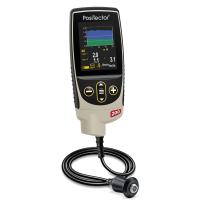
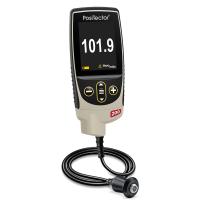
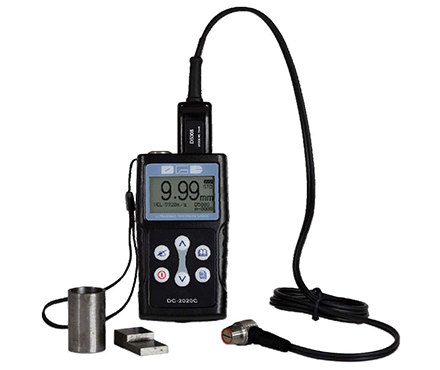
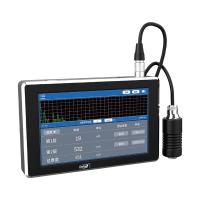
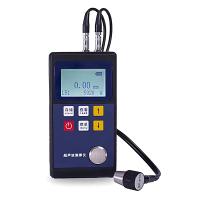
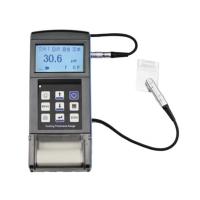
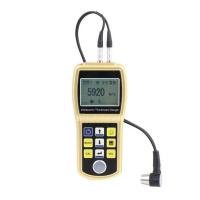
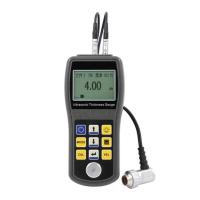
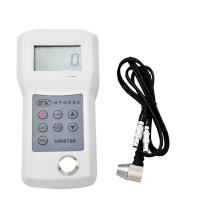
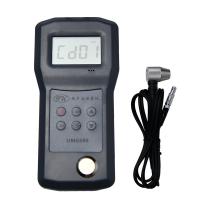
Ultrasonic thickness gages are a non-destructive testing (NDT) method that evaluates the thickness of a component by measuring the time it takes for sound to travel from the transducer through the material to the back end of the component, and then measure the reflection time back to the transducer. The gauge then determines the thickness based on the velocity of sound through the material being measured. The standard frequency used by ultrasonic Thickness Gauges is 5MHz.
Ultrasonic Thickness Gauges are suitable for:
Corrosion Monitoring
Wall thickness measurement
Casting/Forming Thickness Testing
Corrosion gauges with dual element sensors are the primary inspection tool used to measure the following components:
Oil and Gas Pipelines
dynamic pressure vessel
oil storage tank
many other applications
Precision gauges use a single piece sensor to provide the thinnest range and high accuracy. Common applications include metals and various non-metals (i.e. glass, ceramics, plastics, etc.).
Advantages of ultrasonic Thickness Gauges include:
No need to touch both sides of the sample
Can be designed to treat coatings, linings and more.
Good accuracy (0.1 mm and below)
easy to use