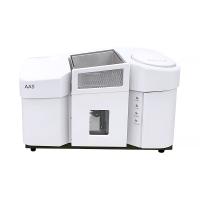
What is Atomic Absorption Spectroscopy (AAS)?
Atomic Absorption Spectroscopy (AAS) is a spectroscopic technique that determines the concentration of a specific element in a sample by atomizing the contents of the sample and measuring the absorbance at wavelengths specific to the specific element in the gaseous state. The atomic absorption line of free atoms is very narrow, and the absorption range is only a few picometers (1 picometer = 0.001 nanometer). Furthermore, these absorption lines generally do not overlap with those of different elements, making the technique specific.
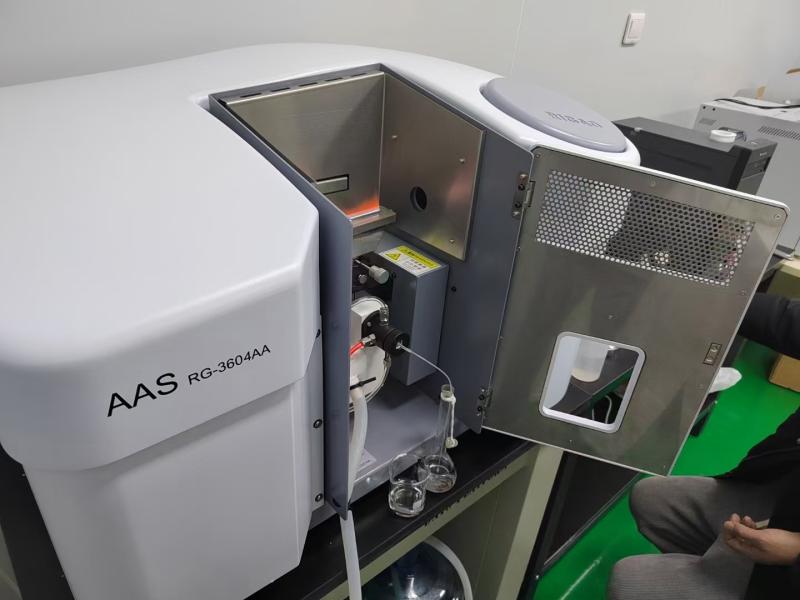
AAS is performed using an atomic absorption spectrometer, which consists of an atomizer, a radiation lamp, and a Detector that prepare the sample for analysis. Depending on the type of lamp, two types of atomic absorption spectrometers can be used: line source (LS) AAS and continuous source (CS) AAS.
LS AAS uses a single lamp to measure a single element of interest, while CS AAS uses lamps that can measure many different elements. While CS AAS sound more attractive, they require more expensive high-resolution monochromators for wavelength selection.
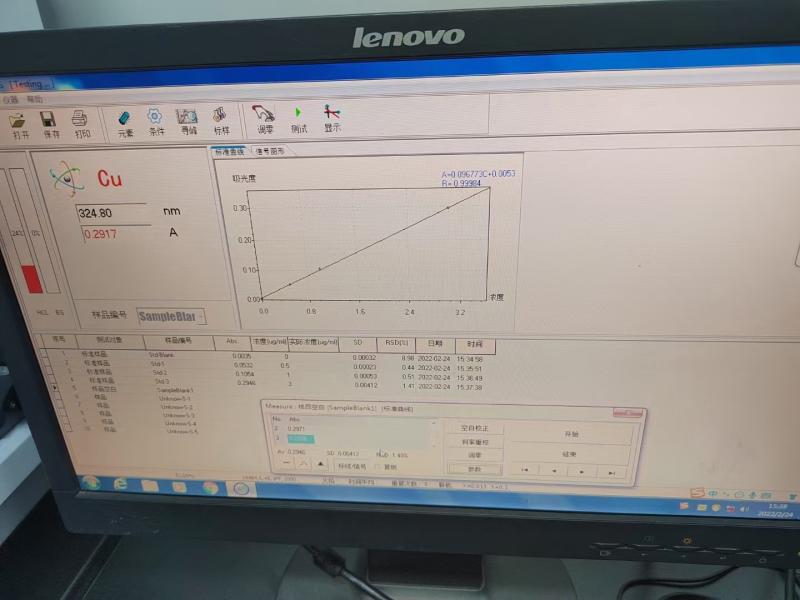
AAS is used in many disciplines such as chemistry, biology, pharmaceuticals, materials analysis, and water quality assessment to determine the presence and concentration of specific atoms of interest, such as toxic metal atoms such as lead. More than 70 elements, mainly metals, can be analyzed using AAS.
AAS starts with specialized sample preparation to release the atoms of an element into solution. Certain metals require a strong acid, such as nitric acid (HNO 3 ), to ensure that any bonds to other atoms are broken in order to atomize into the gas phase as free atoms. If these bonds are not broken, a portion of the metal may not be detected. There are a variety of nebulizers to choose from:
flame atomizer
Electric atomizer
glow discharge atomizer
Hydride nebulizer
cold vapor nebulizer
The atomic absorption lines of these metals lie between 200-700 nm. For LS AAS, hollow cathode lamps and electrodeless discharge lamps are used to generate radiation of specific wavelengths for the absorption lines of specific elements. For CS AAS, use other light sources such as xenon arc lamps. The radiation from the lamp will only interact with free metal atoms at a specific wavelength because at this energy wavelength the atoms are able to undergo a change of electronic state from the ground state to an excited state. Any energy absorbed by the atom goes undetected after passing through the sample, indicating the presence of that atom.
As with any absorption experiment, a sample is used to measure the amount of absorbance at a specific wavelength. The absorbance related to the concentration of the element in question is based on the Beer-Lambert law. Accurate values require calibration and concentration values that lie within a linear Beer-Lambert relationship. Background absorbance correction is necessary to remove further errors in AAS measurements. Correction techniques include:
Deuterium background correction
Smith-Hieftje background correction
Zeeman effect background correction