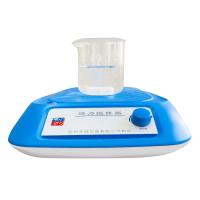
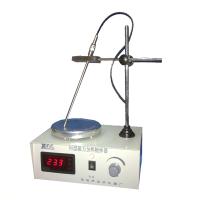
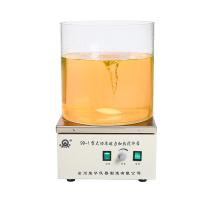
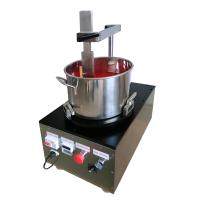
What is a blender?
A stirrer is a mechanical device that helps shake or stir a liquid or liquid mixture. Agitators are used in a wide variety of operations in the chemical, pharmaceutical, food, oil, metal extraction, paint, adhesive, water and cosmetic industries.
What is the mixer for?
The main functions of using an agitator in any plant are:
Get the proper liquid mix.
Facilitates chemical reactions inside the device.
Increase heat transfer during heating or cooling
Maintain a uniform liquid volume during storage.
Disperses immiscible liquids.
Keep product mixed until use.
Mix miscible liquids.
Dissolve some solids into liquids.
An agitator is defined as a machine in which an impeller with a rotating shaft transfers energy mechanically to mix various process media.
What are the types of mixers?
Various types of agitators are available for industrial use. Common agitator types are:
Paddle Mixers: Containing paddle-like blades, these are the most basic type of mixer. They have limited capacity and are primarily used for laminar flow where little shear is required. They are adjustable and contain equal numbers of forward and reverse paddles to move ingredients from one end of the container to the other. A modified version of the paddle mixer is the serrated paddle mixer. The front puddle of this Freeness Tester contains notches or serrations.
Anchor Stirrer: For mixing high viscosity and non-Newtonian fluids, anchor stirrer is widely used. Their name refers to the impeller shape that resembles an anchor. They are usually installed in tanks and containers with conical or round bottoms.
Propeller Agitators: For low viscosity products, propeller agitators are ideal. Homogenization, suspension, dispersion and other functions can be easily realized by using the propeller agitator operating at medium and high speed. These axial flow agitators are ideal for suspensions of solids in liquids as they prevent the settling of solid particles.
Blade agitator: suitable for medium and low viscosity fluids. The blade stirrer is axial type.
Turbine agitator: For high-speed emulsification and dispersion of fluid, turbine agitator is widely used. Turbo agitators are characterized by efficient mixing capabilities over a wide viscosity range. The turbine agitator has an axial input and a radial output. They combine rotational and centrifugal motions in their working process.
Spiral agitator: Because the blades are arranged in a spiral structure, it is called a spiral agitator. A helical agitator looks like a screw thread and is an axial flow agitator that provides vigorous motion within a container or tank. This type of agitator is widely used in the polymer industry.
Main applications, advantages and disadvantages of various types of agitators

Components of a mixer
Agitators typically consist of three main components. They are:
Shaft with impeller and impeller blades
mechanical seal and
Motor with gearbox option for speed control.
The shaft of the agitator is connected to the motor and gearbox, and the impeller rotates for mixing. The number of impellers depends on the height of the liquid in the container or tank. Each impeller usually has 2 to 6 blades. Where a hermetic seal is used instead of a mechanical seal, a magnetically driven stirrer can also be used.