Plastic bottles are commonly used packaging materials in modern packaging. They are beautiful in appearance, easy to process, easy to print, and low in cost. Widely used in food and beverage, medicine, cosmetics and other industries.
The processing of plastic bottles generally adopts preform injection molding, and then blow molding and other processes. During the blow molding process, due to the influence of temperature and equipment, the thickness of the bottle body, bottle bottom and other parts will be uneven. The thinner part of the bottle body is generally the weak part of the plastic bottle's mechanical properties (such as pressure capacity and pressure resistance) and barrier properties (such as the transmission rate of water vapor and oxygen), which reduces the performance of the entire plastic bottle.
Magnetic Induction Thickness Test
The principle of the method is based on the Hall effect theory. When measuring thickness, place a small steel ball on one side of the test material and place the probe on the other side. Rotate the bottle, the steel ball receives the magnetic force of the probe and moves simultaneously. The magnetic induction sensor can measure the distance from the probe to the steel ball to obtain the wall thickness of the plastic bottle. The characteristic of this instrument is that it does not damage the sample and is convenient for measurement, but it is not easy to measure the concave and convex parts of plastic bottles, and the instrument is expensive.
contact measurement
This method of wall thickness measurement is the most widely used method of wall thickness measurement. The principle is: put the measuring support rod into the bottle, touch the measuring part with its dart head, and put the measuring instrument head of the capacity grid sensor on the corresponding part of the plastic bottle body to touch the bottle body and correspond to the dart head. Take a reading of the thickness value on the measuring stand.
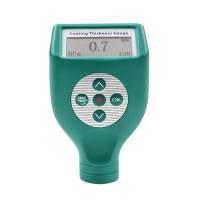
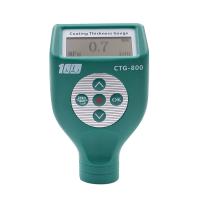
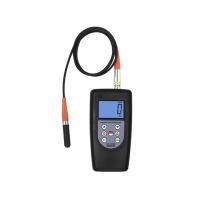
You can refer to plastic bottle Thickness Gauge. The instrument has fast testing speed, comprehensive measuring components, convenient replacement of accessories and low cost. However, the stability requirements for the mechanical structure of the instrument are relatively high.
slice test thickness
This is the original method of wall thickness measurement. Due to the limitations of technology at the time, in the early tests of plastic bottles, many laboratory technicians cut the bottles into pieces, and then tested their thickness with screw micrometers and calipers. The cost of this method is very low, but it is considered to have high accuracy and low test efficiency, and it is a method to be gradually eliminated.
There are also online thickness detection methods, such as infrared method and ultrasonic method, which are used for wall thickness detection of plastic bottles.