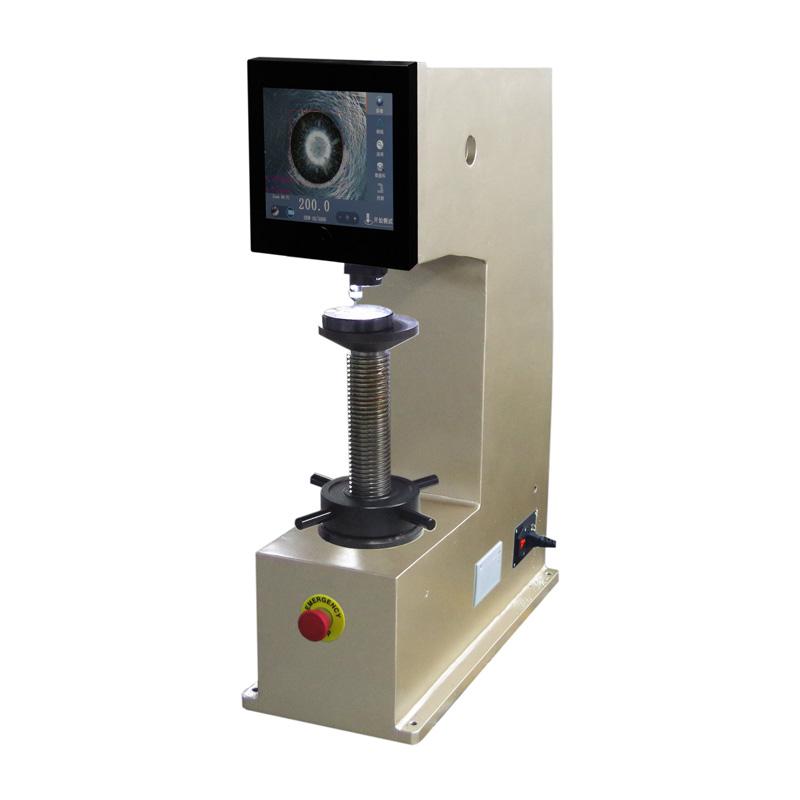
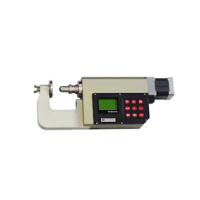
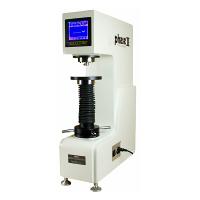
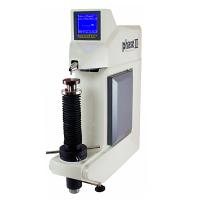
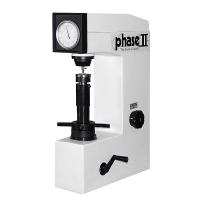
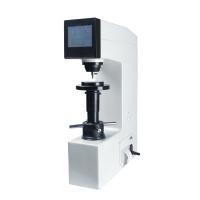
There are many types of Hardness Testers, and the commonly used methods are Rockwell Hardness Tester, Brinell Hardness Tester, Vickers Hardness Tester and microhardness test method. Rockwell hardness measurement is one of the commonly used hardness testing methods. It is represented by the plastic deformation of the pressed material by the indenter (diamond cone or hardened steel ball) under the action of load (including preload and main load). Generally, the greater the indentation depth of the material, the softer the material; the smaller the indentation concentration, the harder the material. Indicates the measurement principle of Rockwell hardness.
The principle of Brinell hardness measurement is to press a quenched steel ball with a diameter of D into the surface of the sample and keep it for a certain period of time, then remove the load, measure the indentation diameter d of the steel ball on the surface of the sample, and calculate the indentation area. Calculate the ratio of load to indentation area, and the hardness expressed by this ratio is Brinell hardness, which is represented by the symbol HB.
Hardness Tester
Technical parameters Initial test force: 10kg
Rockwell hardness test force: 60kg, 100kg, 150kg
Brinell hardness: 62.5Kg, 125Kg, 187.5Kg
Afterburner method: screw afterburner
Indenter: 120°diamond indenter
Ф1.588mm, Ф2.5mm, Ф5mm carbide ball
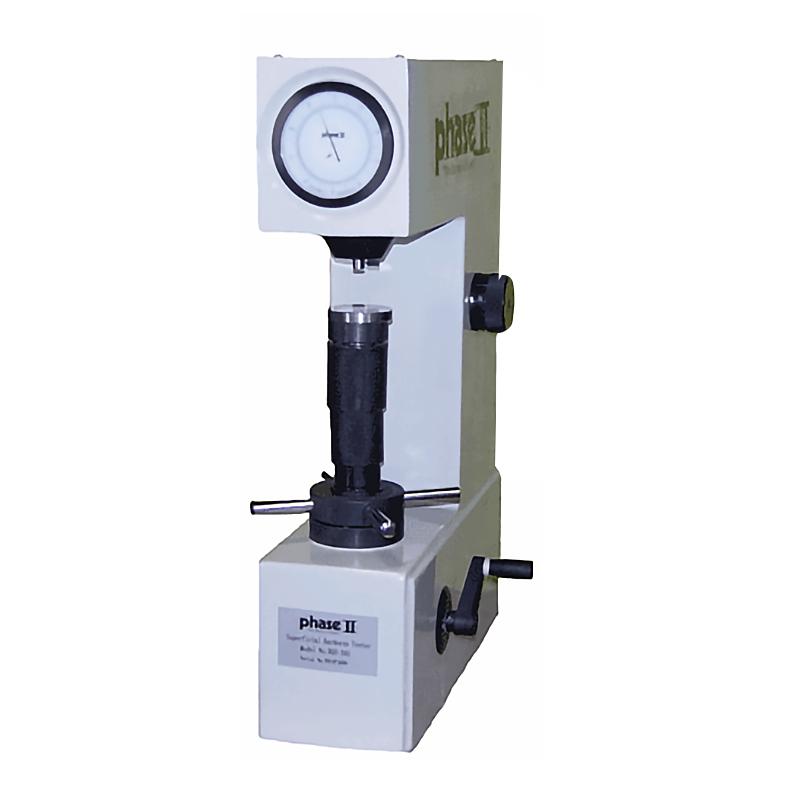
Rockwell hardness HRC, HRB, HRA and other 15 grade cloth
Brinell hardness HB 30, HB 10, HB 5, HB 2.5 four test conditions
Resolution: 0.5HRC
Accuracy: in line with GB/T230/231, ISO6506/6508, ASTM E18/E10
Standard Applications: All metals including steel, forged steel, cast iron, bronze, brass, copper, aluminum alloys, aluminum and more.