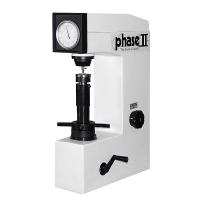
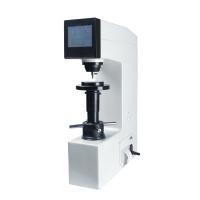
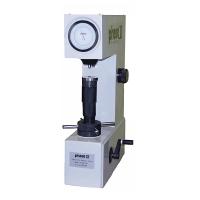
Hardness Introduction
Hardness refers to the ability of a material to resist hard objects being pressed into its surface. It is one of the important performance indicators of metal materials. Generally, the higher the Hardness, the better the wear resistance. Commonly used Hardness indicators are Brinell Hardness, Rockwell Hardness and Vickers Hardness.
Brinell Hardness (HB)
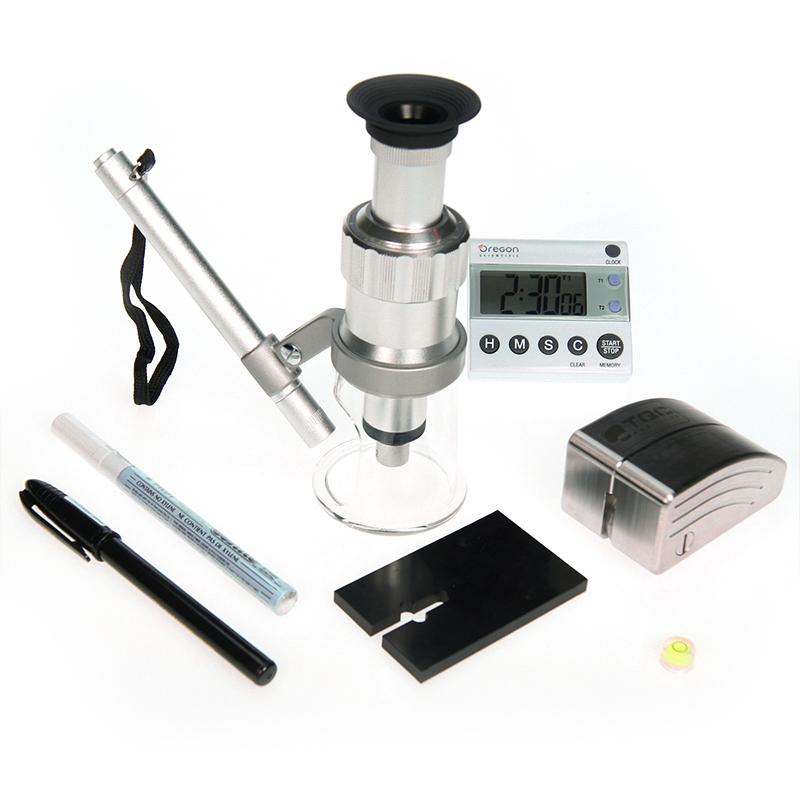
A hardened steel ball of a certain size (generally 10mm in diameter) is pressed into the surface of the material with a certain load (generally 3000kg) and held for a period of time. After the load is removed, the ratio of the load to its indentation area, the Brinell Hardness value (HB), is expressed in kilograms of force/mm2 (N/mm2).
Rockwell Hardness (HR)
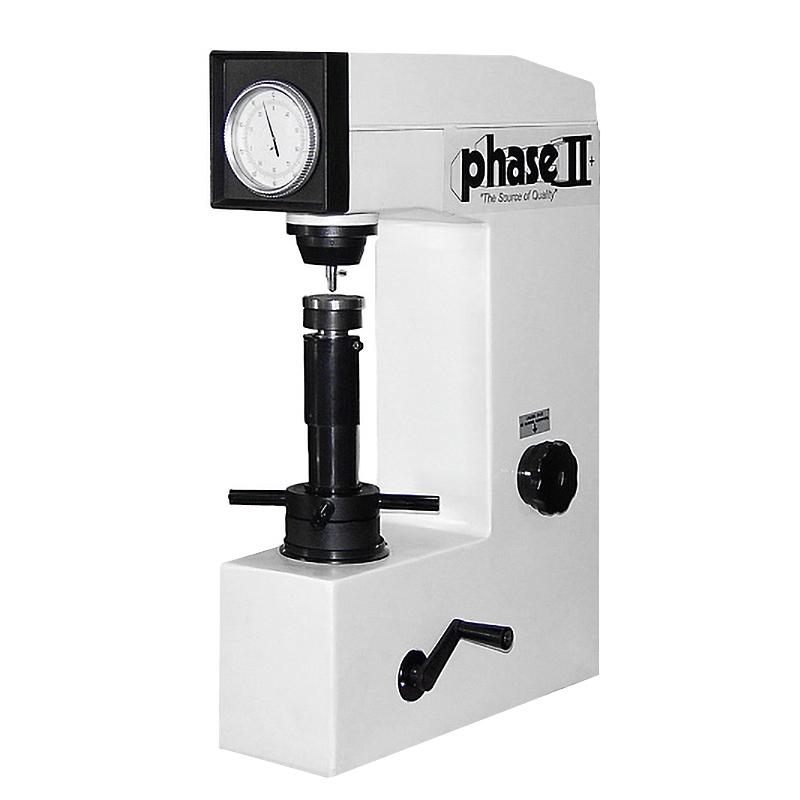
When HB > 450 or the sample is too small, the Brinell Hardness test cannot be used, but the Rockwell Hardness measurement is used. It uses a diamond cone with an apex angle of 120 ° or a steel ball with a diameter of 1.59 and 3.18mm to press into the surface of the measured material under a certain load to obtain the Hardness of the material from the indentation depth. According to the difference in the Hardness of the tested material, it is expressed in three different scales:
HRA: Hardness obtained using a 60kg load and diamond cone indenter. It is used for materials with extremely high Hardness (such as cemented carbide, etc.).
HRB: Hardened steel balls with a load of 100kg and a diameter of 1.58mm are used to obtain Hardness, for materials with lower Hardness (such as annealed steel, cast iron, etc.).
HRC: It is Hardness obtained by using a 150kg load and a diamond conical indenter. It is used for materials with high Hardness (such as hardened steel, etc.).
Vickers Hardness (HV)
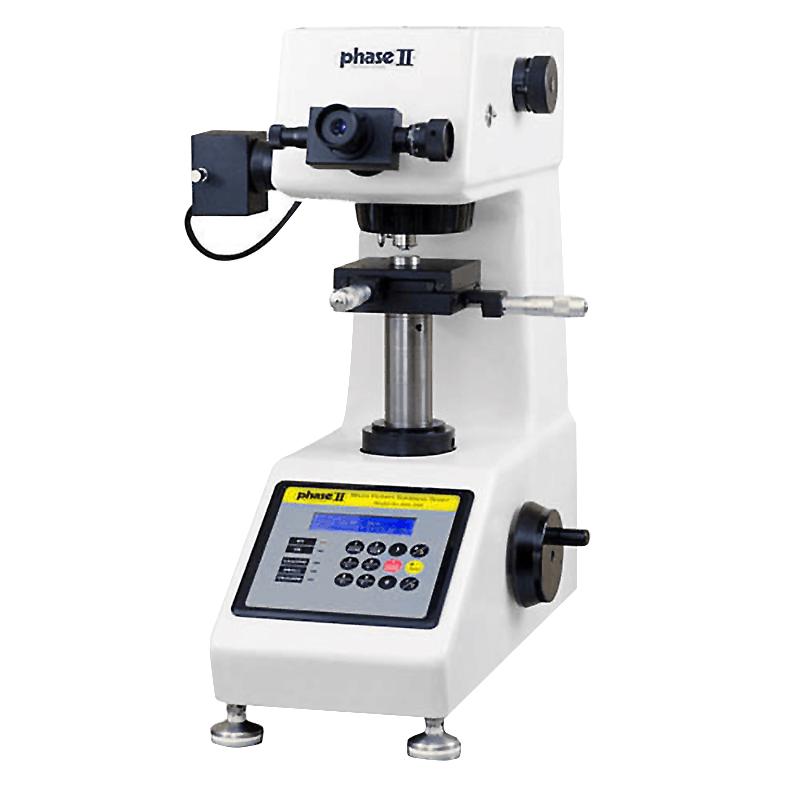
The Vickers Hardness (HV) is pressed into the surface of the material with a load within 120kg, and with a diamond Cube conical indenter with a top angle of 136 °, the surface area of the material indentation pit is divided by the load value, which is the Vickers Hardness HV value (kgf/mm2).
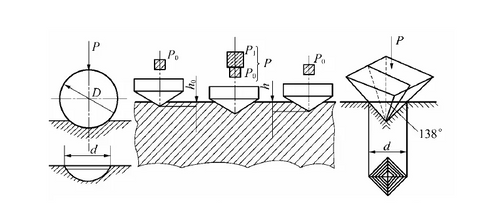
Note: A, B, C have three different standards in HRA, HRB, HRC and other Rockwell Hardness, which are called scale A, scale B, and scale C. The Rockwell Hardness test is one of several indentation Hardness tests commonly used at present. The initial pressure of the three scales is 98.07N (10kgf), and the Hardness value is calculated according to the indentation depth. Scale A uses a spherical cone diamond indenter and then pressurizes to 588.4N (60kgf); Scale B uses a steel ball with a diameter of 1.588mm (1/16 inch) as the indenter and then pressurizes to 980.7N (100kgf total); while scale C uses the same spherical cone diamond as scale A as the indenter, but with a force of 1471N (150kgf total) after pressing. Therefore, ratio B is suitable for relatively soft materials, while ratio C is suitable for harder materials. Practice has proved that there is an approximate correspondence between the Hardness value and the strength value among various Hardness values of metal materials. Since the Hardness value is determined by the initial plastic deformation resistance and the continuous plastic deformation resistance, the higher the strength of the material, the higher the plastic deformation resistance and the higher the Hardness value. However, the conversion relationship of various materials is not consistent.
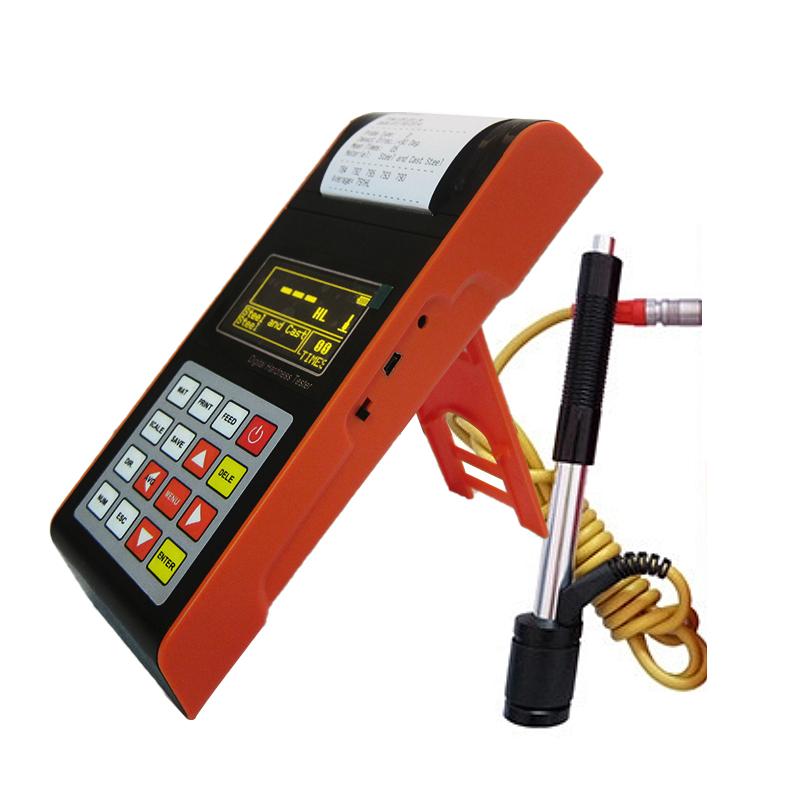
Hardness test is a simple and easy test method in Mechanical Property testing. In order to replace some Mechanical Property tests with Hardness test, a more accurate conversion relationship between Hardness and strength is required in production. Practice has proved that in various Hardness values of metal materials, there is an approximate correspondence between Hardness value and strength value. Since the Hardness value is determined by the initial plastic deformation resistance and the continuous plastic deformation resistance, the higher the strength of the material, the higher the plastic deformation resistance and the higher the Hardness value.
Use the Brinell Hardness indentation diameter to directly convert the Rockwell Hardness of the workpiece In the production site, due to the limitation of the test instrument, the Brinell Hardness Tester is often used to measure the Hardness of large quenched parts. If you want to know the Rockwell Hardness value of the workpiece, the usual method is to measure the Rockwell Hardness value first, and then find the corresponding Rockwell Hardness value according to the conversion table, which is obviously a bit troublesome.
So, can the Rockwell Hardness value of the workpiece be directly calculated from the indentation diameter of the Brinell Hardness Tester? The answer is of course yes. According to the Brinell Hardness and Rockwell Hardness conversion table, an empirical formula that is easy to calculate and easy to remember can be summarized: HRC = (479-100D)/4, where D is Φ10mm steel ball indenter on the workpiece, measured under pressure of 30KN indentation diameter. The error between the value calculated by this formula and the converted value is in the range of 0.5 to -1. This formula is very convenient to use in the field. Might as well try it.