suggestion
UNE-EN ISO 8254-1:2009 standard entitled " Paper and paperboard. Specular Gloss Measurements , a collection of working methods for performing gloss measurements.
In particular, Part 1 of the standard refers to "Illuminating with a converging beam at 75 degrees, TAPPI method". While part 2 of the UNE-EN ISO 8254 standard refers to "75º glossiness for parallel beams, DIN method", part 3 of the rule refers to "glossiness for converging beams at 20º, TAPPI method".
In this way, the measurement conditions need to be defined correctly, since the gloss results are highly dependent on the measurement angle and the type of incident beam (converged or collimated).
UNE-EN ISO 8254-1:2009 states that while the definition of gloss proposed in the standard refers to modes of visual perception, "the methods described use physical measurements of mixed, regular and diffuse reflectance". It added that although "the exact correlation between visual perception and scales established by physical measurements is unknown", this "physical gloss has been shown to be useful for many technical applications and its standardization is therefore justified".
With respect to the object and field of application, the first part of the standard specifies a method for measuring the specular gloss of paper at an angle of 75º with respect to the normal to the paper surface.
Furthermore, the standard indicates that, although its main area of application is coated papers, it can also be used for high-gloss uncoated papers, such as supercalendered papers.
Measurements on printed paper supports and coated supports
The first part of the standard states that differences in the color and diffuse reflectance of these ink films have a negligible effect on the measured gloss. Thus, for example, measurements on otherwise identical white and black surfaces give values for the white surface that are less than gloss units above the value obtained for the black surface.
In addition, the standard explains that the above method should not be applied to high gloss coated, painted, highly varnished or waxed paper or high gloss ink films. The standard suggests that, in the case of these uses, measurements can be made at other angles, such as at 20º, although this method has proven suitable for gloss measurement of most ink films on paper or board.
The surface of the coated support has a covering designed to limit the amount of ink absorbed by the paper in order to produce sharper, sharper prints. Uncoated supports, on the other hand, lack this coverage, resulting in lower print quality.
High-quality surfaces of samples and coatings are designed to combine transparency (or lightness) and brilliance. Although sometimes due to uneven distribution of particles, the surface may show varying degrees of gloss. This can also happen when measuring plastic surfaces that may appear opaque.
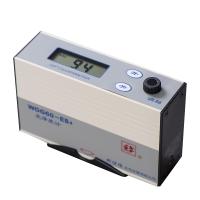
Additional utilities in quality control. Use a 75º geometric Glossmeter
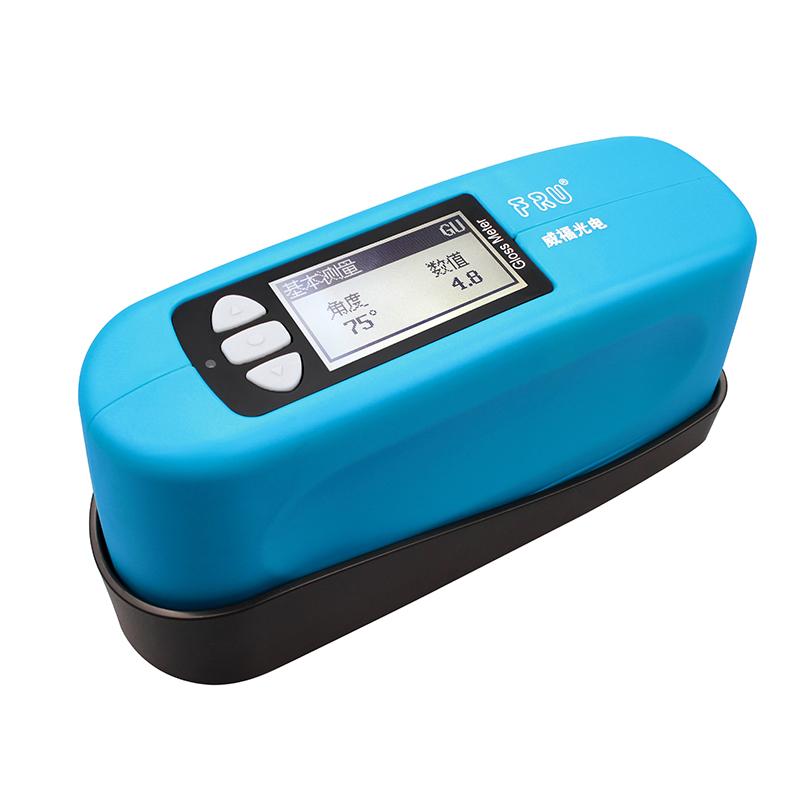
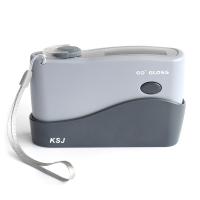
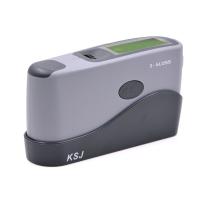
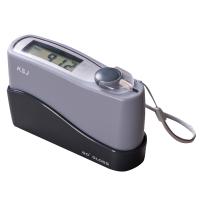
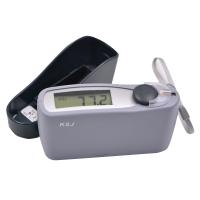
The Geometry 75º Gloss Meter is used in the printing and paper industry to control and measure the magnitude of surface gloss. With this device it is possible to measure the gloss of supports, applied ink layers and overprint varnishes.
However, especially in packaging and the manufacture of magazines and other graphic products, matt, gloss or hybrid varnishes are often applied by UV curing processes. In this case, a dosimeter is used to control the lamp and a gloss meter to check the gloss in different areas. A dosimeter is a measuring device that measures the intensity of UV radiation delivered by a lamp. However, by controlling the gloss level of individual areas, it is possible to verify correct application of the varnish layer as well as adequate and uniform curing. This measurement process is important because a drop in curing lamp output can cause varnish drying problems and, in the case of food packaging, migration problems.