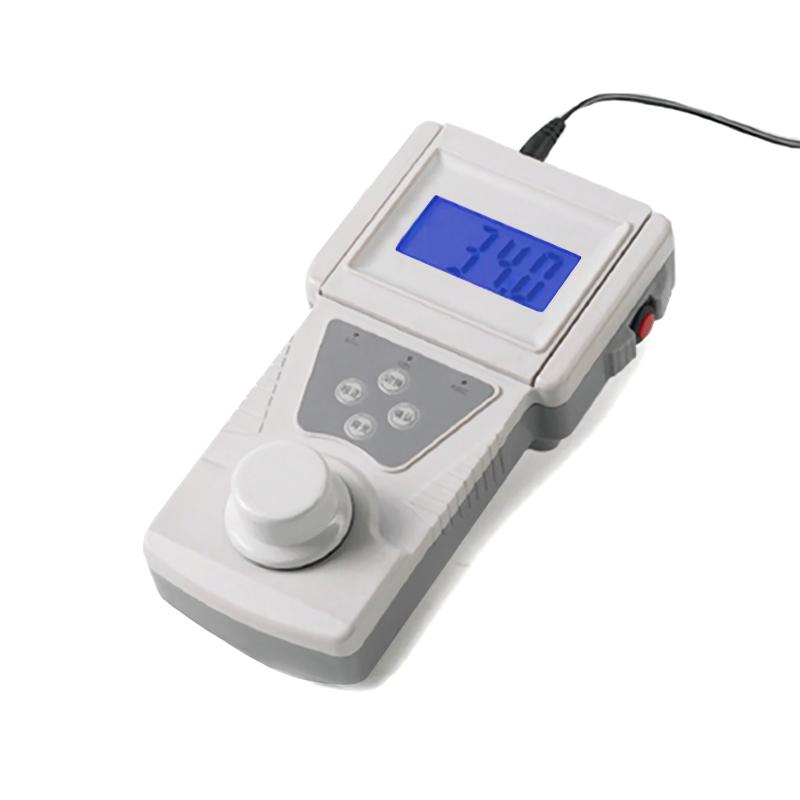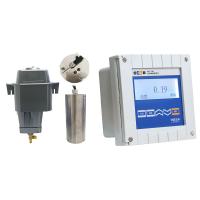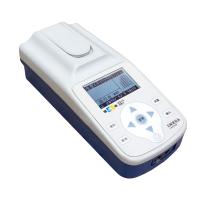
According to the UNE EN 2155-9 standard, haze or turbidity is defined as "the scattering of light by the accumulation of tiny particles within a material or by very small surface defects". Thus, as indicated by the same standard, this may cause vision to blur through materials or image propagation beyond its practical limits.
In this way, the measurement of haze provides information about the amount of light scattered by the haze as it passes through a transparent sample. Therefore, if the surface or substance has many irregularities, the haze value will be higher and objects seen through the material may appear distorted and less clear.
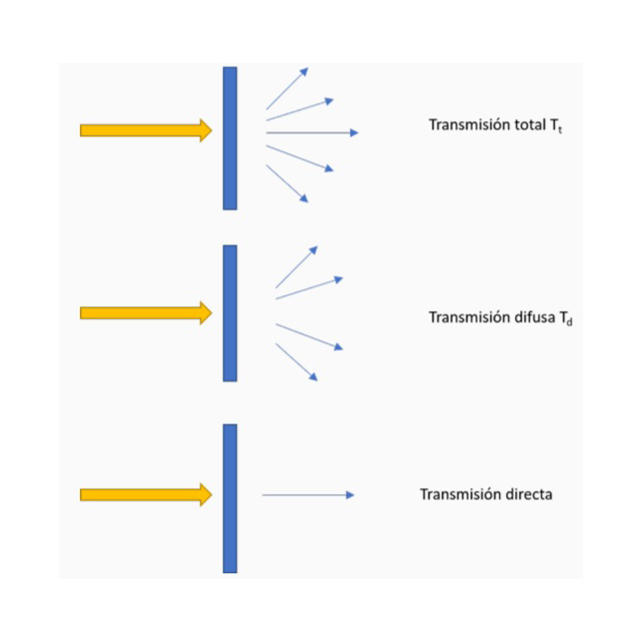
Therefore, turbidity and light transmittance data are particularly useful in quality control, as light scattered when passing through transparent materials can adversely affect the product. One of the effects, as we said, is that the material has a hazy or cloudy appearance. Another effect noted by the ASMT D 1003 standard may be obscuring glare, similar to the glare produced by a car windshield when driving facing the sun.