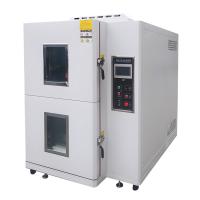
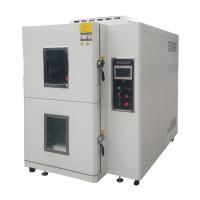
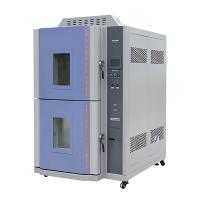
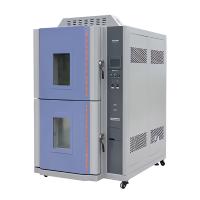
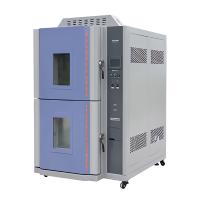
With the built-in measurement window, customers can effortlessly notify objects as they move between different temperature zones.
The vertical thermal shock chamber has two unrestricted hot and cold zones; one inside the other. A single object carrier moves between each zone, presenting the object in exciting temperature changes . One advantage of a vertically oriented chamber is that it takes up less floor space, making it a sensible alternative to otherwise humble labs.
The horizontal thermal shock chamber has three nearly one independent zones: hot zone, enveloping zone and cold zone. The development of the envelope zone takes into account the three-zone test, which is required by several military regulations. This particular and adaptable chamber arrangement can be used in a similar manner for two-zone testing. This is accomplished by programming the thing carrier to gracefully move the thing from hot to cold and back again, forgoing staying in the enclosing area.
The double thermal shock chamber arranges an infection zone between two thermal zones, changing the vertical top and bottom. The object to be measured is placed in one of two object carriers and moved between areas where . In most cases, somewhere near the carrier of something includes the infected area. The program utilizes the chamber cooling system, providing expanded transaction testing throughput . Radiators are integrated into the infected area for defrosting and it can be used as a temperature cycling chamber when the area is not being used for thermal shock testing.
Climate chambers for thermal shock testing are used as a guide for opening abnormal shocks through unforeseen and repeated transitions from high temperature to low temperature, rather than invariably perceiving defective parts or those parts prone to death (the vast majority in the device area).
The temperature of the Test Chamber and the test procedure depend on the requirements of the standard describing the particular cycle to be performed. The purpose of these tests is to see how things behave when they experience thermal shock; in these cases , the model can cool or heat up at different rates in different parts depending on the material. If this is associated with enormous volume gains or losses, the material could encounter enormous mechanical weights, causing disillusionment.
A prerequisite is to consider spreadsheets for flight-related applications, for which stability is a huge foundation. During a true thermal shock, electronic circuits may
Defects appear to be more evident in blocks of better material against impact. Potential problems that could arise in damaged parts are broken pins or incorrect welds if the materials used have different thermal expansions.