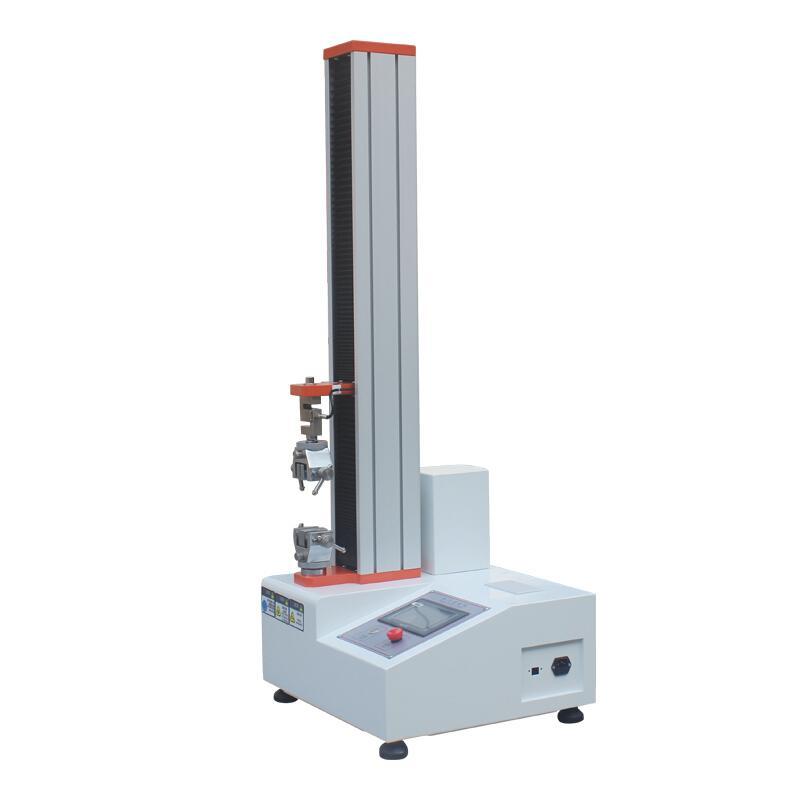
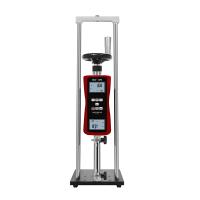
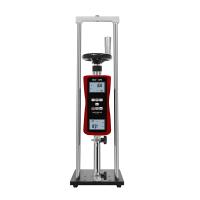
Tensile testing machines are widely used in metrology and quality inspection, civil aviation, automobile production, machinery manufacturing, electronic appliances, textile and chemical fibers, rubber and plastics, packaging materials, building materials, ceramics and other industries. The following is a brief introduction to the main functions of Tensile Testing Machines in several industries. application.
car production
For the automotive industry, Tensile Testing Machines primarily test the soundness and safety of vehicle designs, parameters of interest include material stiffness, component testing, joint technology, fatigue and material forming.
For engines and transmissions, clutches, chains, high temperature materials and crankshafts are tested. For bodywork, testing is required for steering columns and linkages, springs and dampers, bumper shocks and stiffness, door fasteners, window and door seals, and more. For interior design, seat belt tension, head restraints, car seats need to be tested for firmness and durability. For electronic component design, it is necessary to test the reliability of buttons and switches, soldering and PCB boards, insulation of wires, etc.
Civil Engineering/Architecture
For the civil engineering and construction industries, mechanical testing using Tensile Testing Machines is required to confirm that materials are reliable, safe and within design limits.
Construction materials and structures include minerals, plastics, wood, metals and composites for roads, bridges, civil engineering structures and buildings. They are used in many forms including powders, blocks, bulk goods, foils, panels and stones. Test facilities require servo-controlled test systems for compression, tension, fatigue and fracture testing of concrete, steel bars, beams and other construction materials.
electronic product
For circuit devices and circuit boards, Tensile Testing Machines mainly test mechanical strain and fatigue life. Testing the mechanical durability and integrity of electronic components and assemblies is important to validate designs, improve manufacturing, and ensure product reliability.
Use Tensile Testing Machines for a variety of tests including adhesive, joint, interconnect and packaging testing. Testing includes adhesive peel, microbending, indentation and die shear, and component testing includes contact spring durability, cycling and fatigue testing of handset components.
Pack
Packaging and packaging materials are designed to withstand the many stresses and forces that are expected to occur during transportation, but common ones are those caused by compression, vibration, shock, and changes in climatic conditions. The purpose of testing packaging with Tensile Testing Machines is to preserve the products during shipping and to ensure that these products are of high quality.
To achieve this, Tensile Testing Machines are used to test a wide variety of products and materials. These materials include, but are not limited to, cardboard, paper, plastic, wood, foam, metal, boxes, crates, strapping, insulation, tape, and pallets. Each of these items has advantages and disadvantages and requires specific testing procedures to determine whether they provide an appropriate means to ensure the safety of products during transportation.
Biomedical Science
Tensile testing machines continue to play a strategic role in the continuous improvement of the performance and compatibility of new biomaterials and improved medical devices. Tensile testing machines are commonly used for biomedical research and medical device development and product validation.
The Tensile Testing Machine can test the mechanical properties of various materials, such as rubber, foam plastics, wire and cable, seat belts, safety belts, belt composite materials, steel pipes, spring steel, stainless steel, castings, steel plates, non-ferrous metal wires and other materials, the following These materials will be briefly classified as follows.
Adhesive
A binder is a substance that creates a bond between surfaces of materials. Adhesives can typically take the form of glues, pastes, laminates, cement, mortar or tapes and gaskets.
Many adhesives are subjected to various forces during use, but it is common to experience shear, stretching, peeling, or any combination of these forces, which are the leading causes of adhesive failure. Therefore, the strength of the adhesive needs to be indicated by testing these forces on a Tensile Testing Machine.
ceramics
Ceramics consist of compounds of metals and nonmetals, which can be crystalline or partially crystalline. Ceramics are characterized by being brittle, hard, and compressible, but weak in shear, tension, and impact. These materials are very resistant to corrosion and high temperatures and can be designed to be electrically insulating or selectively conductive.
In general, ceramic testing involves a range of mechanical properties of the material, including yield strength, ultimate strength, tensile strength, compressive strength, flexural strength, breaking strength, hardness, fracture resistance, and creep rate. With these test data provided by the Tensile Testing Machine, it is possible to predict the expected behavior of the ceramic during application and show whether it will succeed or fail.
composite material
Composite materials consist of two materials; a matrix and a reinforcement. Most composites use a polymer matrix material or resin, and the reinforcement is usually fibers but may also be ground minerals.
Tensile testing machines are also widely used in composite materials, such as common resins, such as epoxy resin, polyester, vinyl ester and shape memory polymer (SMP) resin. Common fibers include glass fiber, carbon fiber, and Kevlar. Fiber-reinforced composites include short-fiber reinforcements and continuous-fiber reinforcements for layered or laminated structures.
Geotextile
Geotextiles are permeable geosynthetics composed of textiles. Geotextiles are used with foundation, soil, earth and rock materials to prevent erosion of soil and similar materials in the area after they have been altered by construction, usually in connection with civil engineering applications such as roads, walkways, bridges, embankments and retaining walls . They allow water to pass through, but not soil and other materials.
To determine the suitability of a geotextile material for a particular application, appropriate testing on a Tensile Testing Machine is required. The common forces that geotextiles are subjected to during construction are tension and puncture. Each of these forces can cause the geotextile to fail prematurely, resulting in a catastrophic event.
Glass
Glass is a solid, non-crystalline material that is often brittle and used in windows, bottles, electronics, and eyewear. It includes soda-lime glass, borosilicate glass, acrylic glass, sugar glass, and aluminum oxide.
Alternatively, glass can refer to amorphous solids and melts, including plastics and resins. These applications include flat glass, container glass, optoelectronic materials, laboratory equipment, glass-reinforced plastics, and glass-reinforced concrete-reinforced fibers. The mechanical properties of glass can be understood through the data provided by the Tensile Testing Machine.
Metal
Metals are hard, strong, tough and, by their nature, plastic, fusible and malleable, meaning they can be formed into desired shapes without cracking or breaking.
Common tests used to test metallic materials include modulus of stiffness, shear strength, flexural strength, and fatigue strength, as well as time-dependent quantities such as creep and stress relaxation. Tensile testing machines provide test data that can give you an idea of how metallic materials may behave under load and during the life of an application.
Paper
The force requirements for paper testing are relatively low, with most applications requiring less than 1kN. Functional testing of boxes, cores, pallets and corrugated often requires higher forces.
Tensile testing of wet samples typically requires load cells with low force values (1N, or 0.2lbf), while two-point bend testing of paper and cardboard requires load cells as high as 10N (2.25lbf). A 250N (56.2lbf) load cell can handle typical four-point bend tests of corrugated cardboard, dry tensile tests of paper, and extrusion tests, all of which require a Tensile Testing Machine
plastic
Plastics are materials composed of organic polymers and additives, and plastic materials are used in a wide range of applications. The more common forms of plastic and their applications are Styrofoam, or Styrofoam, for insulation and packaging; polyvinyl chloride, for pipes; and nylon, a soft but strong material used in the clothing industry.
In general, the desirable properties of plastic products are low cost, low weight, high toughness, high elasticity and ductility, and high strength in tension, compression, bending, twisting and shearing. These properties are determined by the chemical composition of the material components used to produce plastics, depending on their molecular weight, hardness, density and resistance to heat and solvents, these data are obtained by testing on a Tensile Testing Machine
rubber
Rubber and elastomers are polymers with a degree of viscoelasticity that deform greatly when subjected to external forces, but return to their original shape when the force is removed. Rubber has a wide variety of uses including, but not limited to, seals, belts, restraints, straps, plugs, coatings and shock absorbers. Due to its flexibility and strength, it is often used in automotive, medical and other similar industries.
Tensile testing machine testing of rubber materials includes tension, compression, adhesion and impact testing to determine the modulus of elasticity, tensile and compression strength, elongation or reduction in fracture area, and how it responds to impact forces and elastomeric Adhesion between materials and enhancing materials. These properties define the expected limits of the test material and thus describe how a rubber or elastomer will behave under pressure.
textile
Textiles are materials composed of woven, knitted or braided flexible strands, filaments or fibers. Textiles, also commonly known as fabrics and cloths, are used in a wide range of industries from apparel to biomedicine to aerospace.
Testing the mechanical properties of textiles to determine how they will perform under specific conditions and whether different materials are required. These properties depend on the material of the fiber and its physical geometry, in general, tensile Tester tests fall into the following categories: Tensile, Bending, Friction and Tear
wooden product
Wood and wood are naturally occurring organic materials consisting of cellulose fibers embedded in a lignin matrix, making it a very strong material both in tension and compression. Most wood products are used in construction, furniture, and general merchandise, so common Tensile Testing Machine tests include ultimate or breaking strength in tension, compression, and bending.
There are two types of wood products: natural and engineered. Natural wood is obtained directly from naturally growing trees, while engineered wood is man-made, made from fibers harvested from natural wood and held together using laminates or glue.