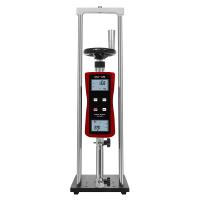
Torque test
Torsion testing is the application of a specified force to twist a material or test part to a specific degree or until the material fails in torsion. Torsional force for torsion testing is applied to a specimen by securing one end so that it cannot move or rotate, and applying torque at the other end to rotate the specimen about its axis. Rotational torque can also be applied to both ends of the sample, but the ends need to be rotated in opposite directions.
The purpose of the torsion test is to determine the mechanical properties exhibited by the material or sample when it is torsion or subjected to torsion force, mainly shear elastic modulus, yield shear strength and torsional fatigue life, ductility, ultimate shear strength and shear modulus of rupture.
What are some common torsion testing applications?
Plastic Torque Testing | Tensile Testing Machines
Torque Testing of Bone Screws | Tensile Testing Machines
Wire Torsion Test | Tensile Testing Machine
Torque Testing of Engineering Composites | Tensile Testing Machines
Static Axial Load Torsion Test | Tensile Testing Machine
Steel wire torsional strength test | Tensile testing machine
What are the common torsion test standards?
ASTM A938 Test Method for Torsion of Electric Wire
ASTM D1043 Stiffness Properties of Plastics as a Function of Temperature, by Torsion Test
ASTM D5279 Test Method for Plastics: Dynamic Mechanical Properties: Torsion
ASTM E2207 Practice for strain-controlled axial torsional fatigue testing of thin-walled tubular specimens
ASTM F383 Standard Practice for Static Bending and Torsion Testing of Intramedullary Rods
ASTM F543 Standard Specification and Test Methods for Metallic Medical Bone Screws
ISO 7800 Metallic materials — Wire rods — Simple torsion test