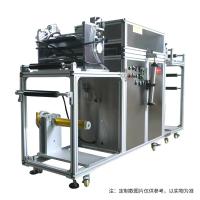
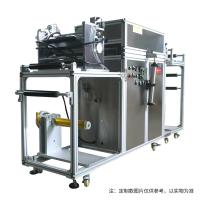
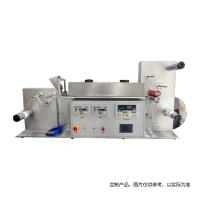
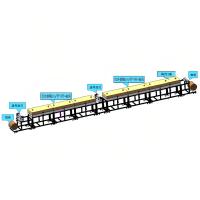
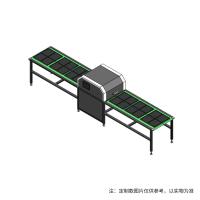
Slot die coating is a technique in which a solution is applied directly to a substrate through a coating "head". The solution flows through the printhead at a defined rate, and the substrate moves beneath it.
Slot die coating is a metered coating process. This means that wet film thickness depends on the amount of solution placed on the substrate. All other parameters are used to improve the uniformity and stability of the coating.
advantage
A major advantage of slot coating is that it is scalable. This means the process will work on an industrial scale. In addition, it can be used for roll-to-roll processing. These factors make it ideal for manufacturing.
Films with better uniformity can be produced.
The method is adaptable and can be used for high or low viscosity solutions and can be used to deposit various thicknesses.
This is a pre-metered technology so the flow of solution is well controlled. Solution waste is minimal.
Can be applied to flexible substrates.
High coating speeds can be achieved.
shortcoming
Slot die coating is a much more complex process requiring optimization of several parameters. Creating high-quality films requires an in-depth understanding of the physics behind each variable. This technique requires more initial training than others.
Initial setup costs are very high compared to other technologies. This is a good investment if producing high-volume low-cost films, but is often too expensive for initial R&D. The Ossila Slot-Die Coater is an affordable, reliable option.
Since most commercial slot die coaters serve more manufacturing needs, a large support infrastructure is often required to accommodate the equipment.
Due to the complexity of the system, there are more sources of defects, making it difficult to diagnose problems.
ideal use
Slot die coating is an excellent process when Graduation up from development to manufacturing. This is due to its low solution waste, wide range of coating viscosities and achievable high production speeds. It is beneficial for coating one side of rigid or flexible substrates and is used in thin film electronics research – especially in photovoltaics and LEDs.