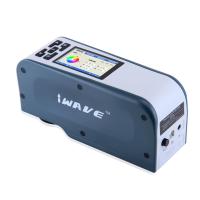
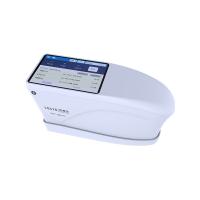
Spectroscopy refers to a family of techniques used to study the interaction between radiant energy and matter.
There are many different types of spectroscopy. In general spectroscopic studies, radiant energy is recorded by a spectrometer after it has interacted with or been emitted by the material under study. A spectrometer outputs the information as a spectrum, which shows the intensity of radiation as a function of energy, frequency, or wavelength. These spectra are then used to obtain information about important properties of the material, including physical or chemical structure, composition and concentration.
The different types of radiant energy used in spectroscopy include electrons, neutrons, ions, and sound waves. However, electromagnetic radiation in the ultraviolet, visible and infrared regions has been extensively studied so far. For this reason, the term "spectroscopy" is often interchanged with "optical spectroscopy".
Spectroscopy has applications in many fields of scientific research, including materials science, biomedicine, astrophysics, and environmental analysis. Depending on the experimental setup, it can be used to measure absorption, transmission, reflectance, scattered emission (photoluminescence and fluorescence), Raman scattering (via Raman spectroscopy), etc.
Spectroscopic methods can be classified according to the type of radiation being measured (e.g. IR, UV, VIS) or the interaction being measured (e.g. absorption, emission, scattering, fluorescence). Common types of spectroscopy include IR and NIR spectroscopy, UV-VIS spectroscopy, and Raman spectroscopy.