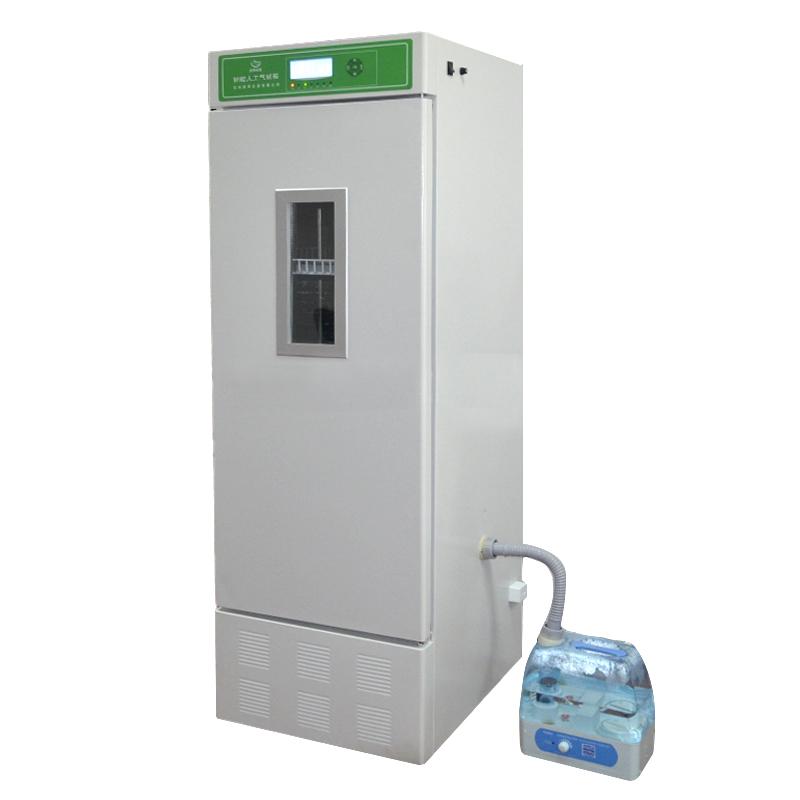
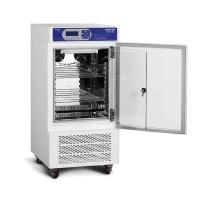
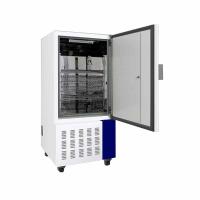
Environmental conditions may directly affect the quality of the product. Temperature and humidity mapping verification can be performed by installing different machines to verify operability. This includes Incubators, constant temperature and Humidity Chambers, freezers, etc.
However, at some point, the manufacturer loses control of the situation. He can manage the conditions of the laboratory, the manufacturing unit, his warehouse. But for retailers, transporters or users, he has no control to this extent. What he can do is make his products withstand different conditions.
In the pharmaceutical industry, you can't test products because they are drugs, but you can certainly test packaging. Whether they are sustainable under different conditions. In addition to the packaging, it is important that the labels are able to withstand environmental conditions.
Humid Environment Test
Constant temperature and Humidity Chambers are widely used in the pharmaceutical industry to evaluate the behavior of products and their packaging under extreme humidity. Testing is not performed on every product. In contrast, testing is an ongoing, simultaneous process during research.
It is important to know if there is any ingredient interference due to humidity, whether it will cause some dangerous results or remain neutral or unaffected.
The second important thing to know is the packaging behavior in wet conditions. Take blister packaging, for example. The lower film is bonded to the plastic cover with an adhesive. If this adhesion is affected by humidity? Labels affixed to the package and labels printed on the package shall not be torn off due to moisture in the air.
High temperature environment test
It is always recommended to store medications in a cool, dry place. The reason behind it is due to the uncertainty of the drug and its packaging due to exposure to high temperature. Some polymer fillers tend to release particles due to increased temperature. These are usually non-reactive fillers, but due to drug sensitivity, such contamination cannot be tolerated. This can disrupt the overall composition. This is why the filler is tested for any change in properties due to ambient temperature. Hot Air Ovens are common in the pharmaceutical industry. In addition to testing products, they are also widely used in dry sterilization processes.