Why is plastic considered a better material and why is it widely used? Well, its flexibility to suit any requirement makes it the choice of the people. Plastic can be easily molded into any size and shape and can be recycled. You can also find polymers in a variety of colors, eliminating the need to tint the material as needed for the application.
For example, in the toy manufacturing industry, brightly colored toys need to be produced to attract children's attention. To eliminate the dyeing step, manufacturers can easily choose colored polymers. Once a better-quality polymer is considered, manufacturers can mold it into different shapes.
But the question here is, how to test the quality of the polymer? The quality of a polymer can only be determined by examining the properties of the polymer.
How to test the performance of molten plastic?
Viscosity is one of the main properties of plastics and helps determine its quality. It helps measure the sustainability of a product for any given application. But why is it important to measure the melting properties of plastics? Well, this is important because plastic is only usable after it has been melted and then molded into the desired shape.
To understand how plastics behave at high temperatures, manufacturers need to understand how the base polymer behaves in the actual process. This will help him use better materials to produce the final product. But to get real results while checking the quality of plastic, you need a testing machine.
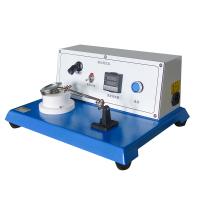
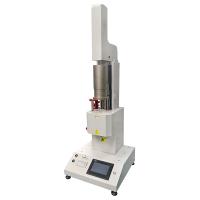
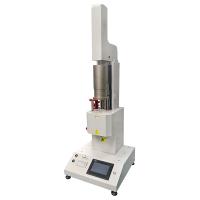
To test the melting properties of polymers, you need a melt flow index Tester. It is a testing machine designed keeping in mind certain national and international testing standards that can help you to properly judge the quality of polymers by obtaining accurate test results.

How does the test machine work?
The melt flow index meter helps determine the flow rate of the polymer when it is in the molten state, and the molten plastic flows out through a hole every ten minutes.
The calculation of MFI helps in the analysis of various properties of materials such as viscosity, chemical structure, strength, etc. To ensure that the test is performed correctly and that accurate test results are obtained, it is important to perform the test in accordance with the instructions in standard ASTM D 1238.
Here we list some important things to keep in mind when conducting MFI testing. Let's take a look.
Always ensure that the test conditions are selected according to the table of materials defined in the standard.
If some materials do not mention test conditions, select 0.15 to 50 g/10 min
Set the temperature of the barrel according to the instructions given by the manufacturer.
The hole is opened and properly cleaned before performing any new tests to ensure that particles from previous tests are not present inside.
Visually analyze the orifice for any scratches or damage.
Use a go-no-go instrument to check the diameter of the die hole.
The piston should also be properly inspected for any scratches or damage.
Users need to take these precautions into account during testing. Also make sure that the test is performed according to the test procedure mentioned and defined in the standard ASTM D 1238.