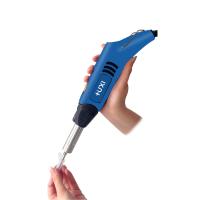
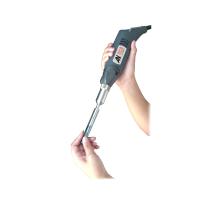
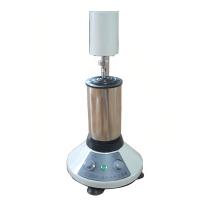
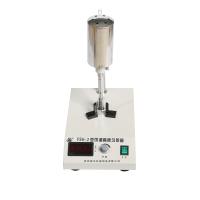
The hand-held homogenizer is specially designed for micro-processing in the laboratory, and is suitable for scientific research, product development, quality control and production processes in factories, scientific research institutions, colleges and medical institutions.
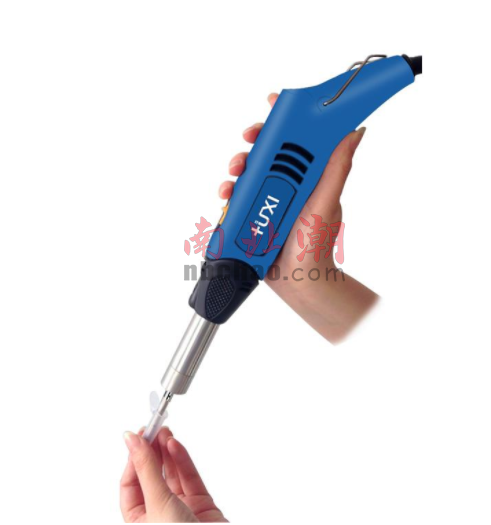
Of course, in the process of using the hand-held homogenizer, we will inevitably encounter some problems.
1. Rotor deformation
If it is found that the rotor of the hand-held homogenizer is deformed, it is likely to be caused by hard particles in the material; excessive viscosity of the material; In this case, first of all, we can reduce the particle size of the material particles, and secondly, we can shorten the length of the fiber, and we can also replace the PTFE bearing.
Solution:
① Do not use it in high-viscosity and fibrous materials for a long time, so as not to cause deformation of the stator and rotor;
② Check the PTFE bearing regularly and replace it in time.
2. The speed regulation fails during the use of the hand-held homogenizer
If the speed regulation fails, it may be that the speed control board is damaged, or the electrical circuit is in poor contact, or the motor may be overloaded for a long time. Generally speaking, we can replace the speed control board, check the electrical circuit, control the use time, and do not exceed the specified time.
Solution:
① Slow and uniform speed regulation;
② Keep the motor clean;
③ Pay attention to the maintenance of the motor, and do not run it with overload for a long time.
3. The motor does not turn
If the motor does not turn, it is mainly because the carbon brush is worn out/the motor is burnt out, and it may also be that the power supply is not connected. You can first check whether the power supply is normal, and then replace the carbon brush / ask a professional electrician to check.
Solution:
① Regularly ask a professional electrician to check the wear of the carbon brush;
② Pay attention that the power cord is not squeezed and worn to prevent short circuit and open circuit of the power supply.
4. The material is ejected from the upper overflow hole
When the flow is ejected from the upper overflow hole, it is probably due to PTFE bearing wear/spindle wear or eccentricity/bearing damage. At this time, we can try to replace the PTFE bearing/replace the main shaft/replace the bearing.
Solution:
① Regularly check whether the PTFE bearing is worn to ensure that the main shaft is not easy to wear and eccentric;
② Check whether there is heat or abnormal noise at the bearing;
③ It is recommended that the material should not exceed the second overflow hole on the stator tube every time it is used to ensure that the material is not easy to enter the bearing part;
④ After each use, prevent materials from entering the bearing along the stator tube;
⑤ Clean the working head after each use, and store it in a dedicated working head casing in a dry place.