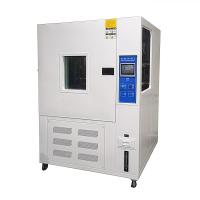
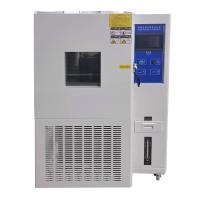
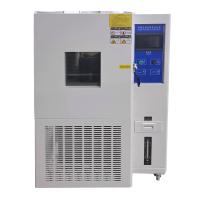
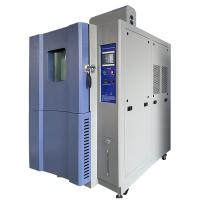
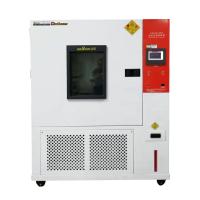
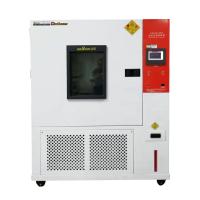
High-low Temperature Test Chamber and constant temperature and humidity Test Chamber are two product names. When most people first saw it, they probably felt that the gap between them would be huge. they are the same. A series of products, the high-low Temperature Test Chamber is a pure high temperature and ultra low temperature conversion experiment, and the constant temperature and humidity Test Chamber has an additional humidification system software than the previous model, which can perform cold and humidity experiments. Different from the constant temperature and humidity Test Chamber, the ultra-low temperature of the high-low Temperature Test Chamber far exceeds zero degrees Celsius. It has several categories.

1. -20℃~150℃; 2. -40℃~150℃; 3. -60℃~150℃; 4. -70℃~150℃; 5. -80℃~150℃. If a lower temperature is desired, an ultra-low temperature box with a range of -220°C can be ordered.
The humidification system software of the constant temperature and humidity Test Chamber is based on the shallow tank humidification method. The operation mode of the air humidifier is: non-contact and equal cycle time single pulse width adjustment, the intermediate relay (SSR) is selected, the environmental humidity control SSR+PID system software adopts the same channel column centralized control, with automatic compensation water level line and low water level alarm device. be careful. The tap water for humidification should be mineral water or pure water for your use. It is not recommended to drink water, so as not to affect the actual effect of the experiment or block the water pipe. The standard environmental Test Chamber chooses the gains and losses of external manual water release. If there is pure water there,
The high-low Temperature Test Chamber is based on the foot-operated refrigeration compressor, and can achieve ultra-low temperature within -80°C. All refrigeration cycles use the reverse Karoo cycle system. The circulation system consists of two isothermal processes and two adiabatic processes. The whole process is as follows: the refrigeration compressor performs adiabatic decompression due to the high working pressure of the refrigerant, and the power consumption promotes the temperature rise of the exhaust pipe. , the refrigerant then goes through the isothermal process of the cooler and the surrounding area. The material forms a heat exchanger, which then transfers heat to surrounding materials.
Then the refrigerant undergoes work through the adiabatic deformation of the overflow valve, and the temperature of the refrigerant will decrease at this time. The refrigerant passes through the isothermal process of the air conditioner evaporator, absorbs heat from the object with higher temperature, and reduces the temperature of the refrigerated object. Such a circulation system can achieve the purpose of lowering the temperature.