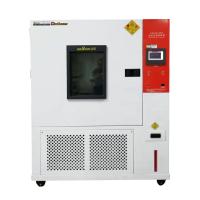
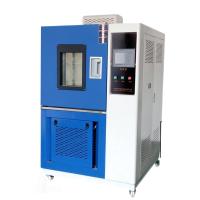
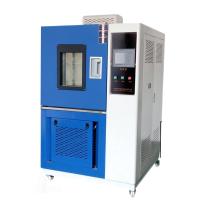
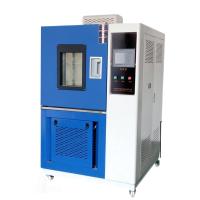
What is a temperature cycle Test Chamber/thermal cycle Test Chamber?
Temperature cycling chambers are ideal for simulating a wide range of humidity and temperature conditions. A Test Chamber can be used to analyze fluctuations in equipment. Electrical, electronic products, machines and assemblies subject to rapid temperature changes and gradient requirements benefit from streamlined modern scroll engines to provide small form factors for rapid temperature cycling.
The temperature cycling Test Chamber enables you to conduct thermal evaluation profiles anywhere you want - at your test bench, on your manufacturing floor or in your evaluation laboratory. Additionally, thermal cycling chamber systems feature high thermal airflow systems utilizing thermal testing, rapid temperature cycling, and equipment temperature characterization. Thus, you can test different assemblies, hybrids, modules, PCBs and other digital and non-electronic components within a precise temperature range of -90°C to +225°C.
How does a temperature cycling chamber work?
Thermal cycling is an indoor assessment that slowly moves merchandise from one extreme to the other at a rate of 5C to 15C per minute. In this evaluation, the low temperature range was -25C to -40C and the high temperature range was 65C to 100C. Both of these assessments have consequences for the failure to induce growth and accelerated expansion of the commodity. Instead, we select a more comprehensive range of temperatures across events. This evaluation is designed to verify the viability of the component under specified conditions beyond its maximum score. The Test Chamber is capable of providing and controlling the prescribed temperature in the working area.
The machine sets the internal components to connect to the airflow with essentially no airflow barriers. When special installation is required, it needs to be specified. The transition rate can be corrected to limit thermal stress and guarantee that the component reaches that temperature. You will find a hold time called soak at a predetermined temperature to ensure the part reaches the desired temperature. Faster ramps are often better priced in manufacturing, but on the other hand, care needs to be taken not to worry about components beyond what they can resist. Temperature cycling test assessments are typically held at a specified temperature (usually elevated) to confirm changes in functional parameters over time in a specific environment.