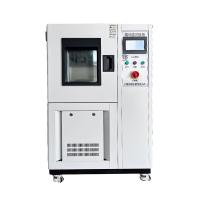
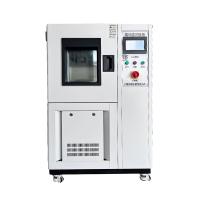
At present, electronic instruments are used in military, civilian and high-tech fields. However, low temperature environments exist in most of its use environments. Therefore, the low temperature adaptability of electronic instruments is directly related to its quality. Based on this, this paper analyzes in detail the impact of low temperature environment and low temperature testing technology related to electronic instruments.
1. Overview of low temperature environment
Low temperature environment, as a common natural environmental condition, is often caused by geographical latitude, altitude, season, day and night changes, and the work of other refrigeration equipment. In the process of developing electronic products, in order to meet the needs of low-temperature storage and work, my country is currently planning to build a relatively large low-temperature environment laboratory. Some existing cryogenic laboratories are also facing problems such as equipment upgrades and technological transformation. Simulating a low-temperature environment, the technology faces challenges of technological development and new opportunities for development. The research on the adaptability of some other industrial products to the low temperature environment is also becoming more and more extensive and in-depth.
2. Analysis of the impact of low temperature environment
1. Adverse effects on metal materials of electronic instruments
In ordinary electronic instruments, the strength of metal materials such as steel will decrease in a low temperature environment, and the material will easily become brittle, especially the ability to resist impact loads will decrease to a certain extent. If electronic instruments are exposed to low temperatures, they can easily break. Electronic instruments of different materials have different low-temperature embrittlement temperatures. When electronic instruments are in a low temperature state, most of the brittle failures usually occur in the adjacent welding area or welding area, which is caused by cracks in the welding area. Therefore, the staff should pay special attention to the problem of low temperature embrittlement in the welding area of metal materials in electronic instruments.
2. Adverse effects on non-metallic materials of electronic instruments
Plastic, rubber and other non-metallic products of electronic instruments will harden, crack, and become brittle in low-temperature environments, and their strength will drop to a certain extent, losing their original elasticity, weakening the sealing of electronic instruments and reducing the demand for rubber functions, and even invalidated. Where the plastic is under stress and its tendency to break. For example, electronic instruments used in low-temperature environments are prone to embrittlement and fracture after being subjected to low-level impact stress, and they are easy to fall off, resulting in electronic instruments that cannot be used normally.
3. Adverse effects on electronic components
Capacitance, resistance and other performance parameters of electronic components will change due to low temperature environment, which will affect the functional performance of measuring instruments, automatic control systems, and electrical instruments.
4. Cold shrinkage caused by low temperature environment
In a low temperature environment, most electronic instrument materials will produce a certain amount of cold shrinkage, and the cold shrinkage of electronic instrument materials will have the following adverse effects:
(1) The coordination between electronic instruments and machinery will change intermittently, and the relative working action of the machinery will slow down, or even get stuck;
(2) The cold shrinkage of electronic instrument materials will deform or even break the relevant parts of the instrument;
(3) The shrinkage of electronic instrument materials after pre-cooling will directly affect the test accuracy of the instrument, and then affect the measurement results, and even lead to safety accidents.
5. Freezing and condensation problems
In a low temperature environment, electronic instruments may condense and freeze water vapor, resulting in the following adverse effects:
(1) In a low temperature environment, water vapor will form fog on the surface of the lens of the optical instrument, affecting its optical performance;
(2) In a low-temperature environment, if there is moisture condensation on the insulator of the power circuit and the circuit board of the electronic instrument, it will cause leakage or short circuit accidents, and in light cases, it will affect normal use and cause serious safety accidents;
(3) In a low temperature environment, if the inside of the moving parts freezes due to water vapor, the action of the moving mechanical structure will stop and the function will fail.
3. Low temperature environment test technology
1. Test requirements
The main content of low temperature test research on electronic instruments includes some characteristics research of some electronic components in low temperature environment, research on some measuring instruments with low temperature environment requirements, and some performance research. Some electronic instruments in low temperature environment. Generally, the adaptability of this kind of instrument to low temperature environment is 10 ℃ ~ 40 ℃
2. Test purpose
The purpose of the test is to verify the adaptability of electronic instruments to temperature within a certain range.
(1) The general storage temperature range is -40°C~60°C;
(2) The general limit working temperature range is -10℃~50℃;
(3) Usually. The rated operating temperature range is 0°C~40°C.