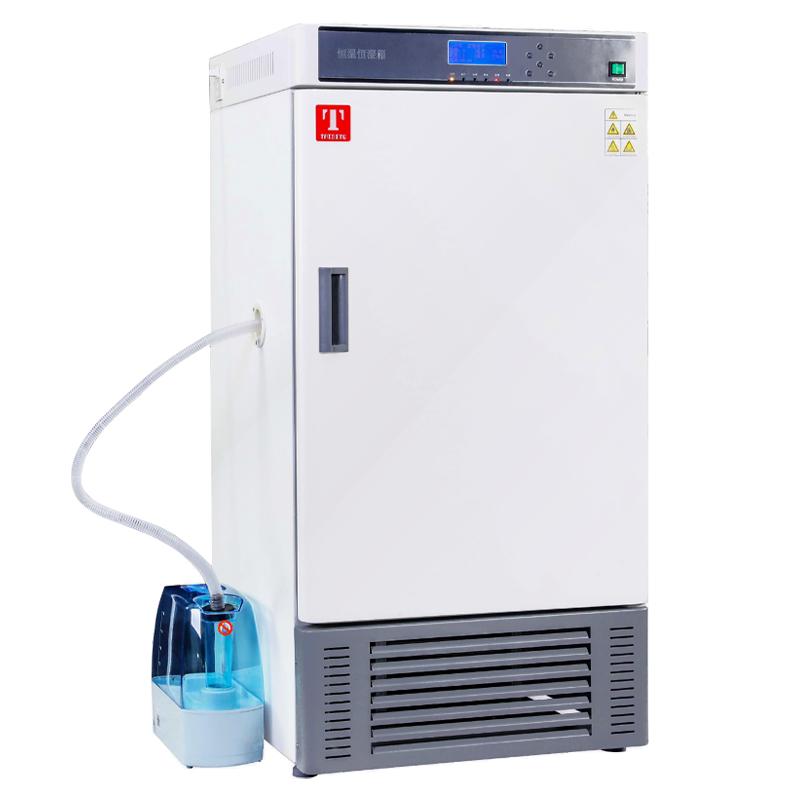
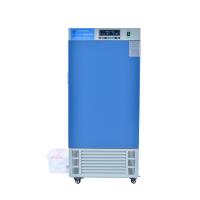
Temperature and Humidity Chambers simulate various temperature and humidity conditions to test various products and components. It can perform basic thermal cycling tests or accelerated stress tests. There are 6 models to choose from, with test cabinet sizes ranging from 80L to 1000L. Custom sizes are also available.
The imported temperature and humidity controller regulates the temperature and humidity in the temperature and humidity Test Chamber. You can set many parameters with a programmable controller. Provides digital display of temperature and humidity. The operation of the constant Temperature Test Chamber is also very simple.
Industrial programmable controllers control equipment and accurately measure temperature and humidity. It adjusts the humidity level in the room and processes the data to produce printed results. It can continuously and repeatedly measure humidity with high precision and controllability.
It can be used for product testing in aerospace, metrology, petrochemical, pharmaceutical engineering, agricultural research, life science and other scientific research units.
How does a constant temperature and Humidity Chamber work?
The main component is the mechanism that brings moisture and heat into the Humidity Chamber. You can add moisture to the chamber using a spray, bath, or other method. A similar principle applies to heat provided by heating elements or coils.
Most Humidity Chambers can be designed, fabricated and customized to meet customer requirements. There are many Humidity Chambers available, but the basic ingredients of heat and water are required to create the desired humid conditions.
Temperature and humidity are the two main factors affecting product stability. Manufacturers test the effect of humidity on their products, since fluctuations in humidity can cause expansion and contraction. The three main methods of creating artificial humidity include steam generators and atomizers.
steam generator
An immersion heater heats the water in the steam generator. Steam is generated by the Water Tank and rises to the top of the chamber where the heater generates humidity. Using a CNC programmed control panel, the steam generator chamber generates heat ranging from 300 to 1300 degrees Celsius. The main advantage of steam generator Humidity Chambers is the production of large volumes of moisture and water vapor of consistent quality.
Atomizer Test Chamber
Nozzles spray atomized water into the Test Chamber. This creates moisture and humidity. The chamber heater heats the water to create humidity. The operation of the nebulizer Test Chamber is easy to understand. It produces a lot of moisture.
How to choose a constant temperature and Humidity Chamber?
There are many factors that go into the decision to conduct in-house testing. These include company size, product type, quality control and cost. There are many other factors to consider when purchasing a testing room. For large companies with specific goals, the selection of test rooms should be based on scientific research and customer needs. The company grows and prospers. They found that their customers were better served if they did in-depth research on their products.
weakness
coating
Coatings are used to protect products from adverse atmospheric conditions. Humidity chambers are designed to subject coated products to extreme conditions. These tests can lead to cracking, swelling, shrinking and moisture ingress.
foggy
Moisture leak testing is performed on sealed units with viewports, windows or windshields. These products are subject to rapid temperature changes and therefore typically pass the rapid temperature rise or fall test. Fog indicates poor product quality and potential failure.
Tightness
Temperature and humidity are hazardous atmospheric conditions. It is humidity and temperature tested to ensure the product is water resistant. Leaks, dripping, and collection are common faults found during testing.
mechanical failure
When a product passes through different climatic conditions, the atmosphere creates a lot of pressure. Humidity chambers can create conditions that can lead to product mechanism. Manufacturers are primarily concerned with the testing of mechanical components and their correct function, especially in the case of microcircuits.