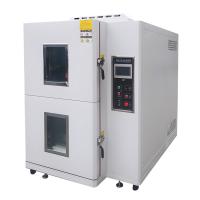
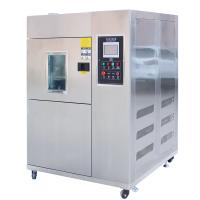
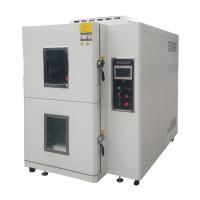
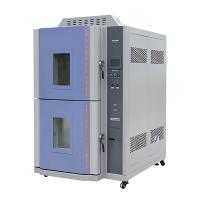
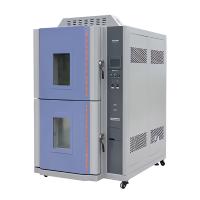
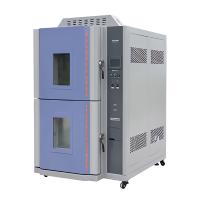
The thermal shock chamber can be used to test the relevant parameters of the material in the instantaneous extremely high temperature and extremely low temperature continuous environment. The device has been used in the detection of electronic equipment, plastics, metals and other materials. Some changes caused by the thermal expansion and contraction of the specimen are detected in a short time, so some materials cannot be detected. What materials cannot be detected by thermal shock chambers?
Thermal shock chambers cannot be used to detect explosives
Do not use this thermal shock chamber device for testing due to the explosive effect of explosive substances. Common explosive substances include explosive nitrates (such as: nitroglycerin, nitroglycerin, nitrocellulose, etc.), nitro compounds (trinitrotoluene, trinitrobenzene, trinitrophenol, etc.).
It also cannot be used to detect flammable substances. According to the different ignition points, there are the following five categories:
(1) Flammable substances with an ignition point above 30°C: coal, gasoline, turpentine, isoamyl alcohol, and sour vinegar.
(2) Flammables with ignition points above 0°C: alcohol, dimethyl ether, isovaleric acid, etc.
(3) Flammable substances whose ignition point is higher than -30°C but lower than 0°C: general ethane, ethylene, acetone, benzene, ketone, etc.
(4) Combustible substances whose ignition point is below -30°C: ethanol, gasoline, acetaldehyde, propylene, carbon disulfide, etc.
(5) Flammable gas: When the temperature is 15°C, it can burn at 1 atmospheric pressure. For example, hydrogen, acetylene, ethylene, methane, ethane, propane, butane, and the like.
Combustibles cannot be detected in thermal shock chambers
While it is not a flammable substance, it can pose a safety hazard due to rapid temperature changes in equipment. These flammable substances include: lithium, potassium, sodium, yellow phosphorus, phosphorus sulfide, phosphated lime, red phosphorus, aluminum powder, calcium carbide, magnesium powder, sodium bisulfite, etc.
Some oxidizing species cannot be detected in the thermal shock chamber
Chlorates (potassium chlorate, sodium chlorate, ammonium chlorate, etc.), hypochlorites (potassium nitrate, sodium ammonium peroxide, etc.), inorganic peroxides (potassium peroxide, sodium peroxide, barium peroxide, etc.).