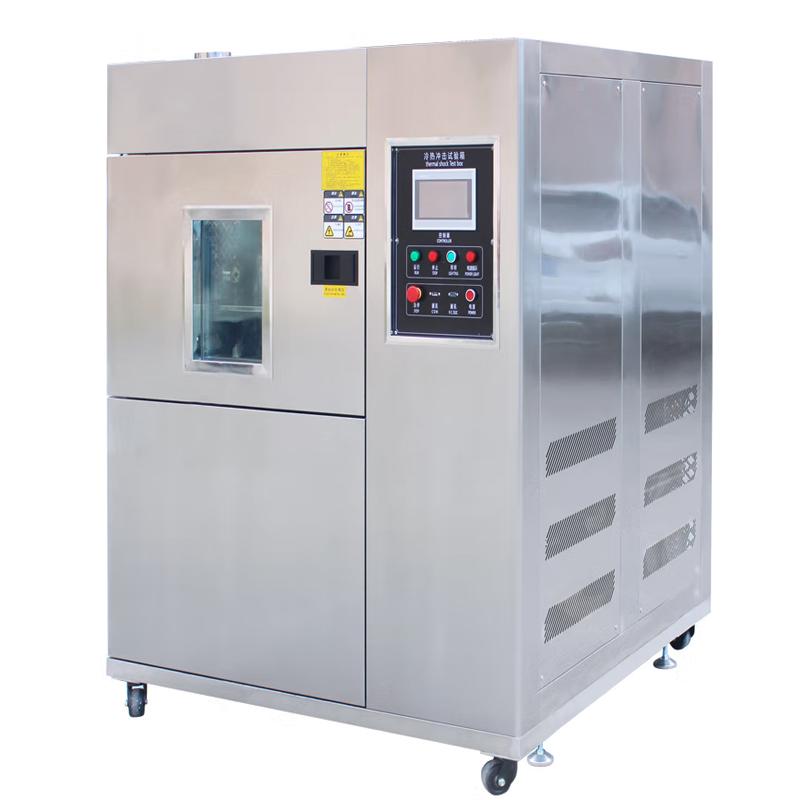
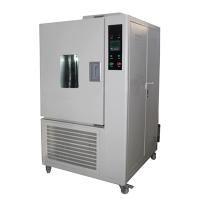
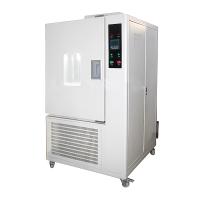
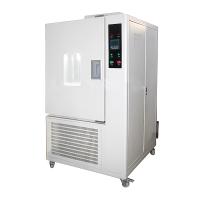
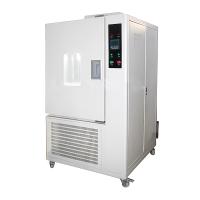
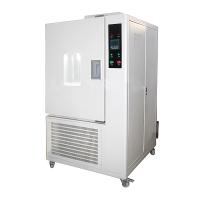
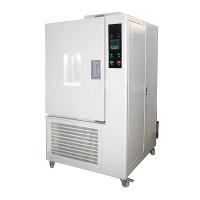
"Environmental testing" refers to testing that exposes a product or material to natural or artificial environments under specific conditions to evaluate its performance under storage, transportation and use conditions that may actually be encountered.
There are three types of environmental tests in high-low Temperature Test Chambers: natural exposure tests, field tests and artificial simulation tests. The first two types of tests are costly and time-consuming, and the repeatability and regularity of the tests are poor, but the problems found in the tests can more truly reflect the actual use status, so these two tests are the basis of artificial simulation tests. Artificial simulation environment testing is widely used in quality inspection. In order to make test results comparable and repeatable, basic environmental testing methods for products are now standardized.
Common environmental testing methods are as follows:
1. High-low Temperature Test Chamber High-low temperature test: used to evaluate or determine the adaptability of products for storage and (or) use under high-low temperature environmental conditions.
2. Temperature shock test of high-low Temperature Test Chamber: to determine the adaptability of the product and the bearing capacity of the structure under one or continuous temperature changes.
3. Damp heat test in high-low Temperature Test Chamber: It is mainly used to determine the adaptability of the product to heat and humidity (whether condensation occurs), especially the changes in the electrical and mechanical properties of the product. It can also be used to check the resistance of test samples to certain corrosive abilities.
(1) Constant humidity and heat test: generally used for products whose moisture mechanism is mainly adsorption or absorption, and only permeates (or diffuses) without respiration. Performance and mechanical properties, or whether sealing and insulating materials can provide adequate protection.
(2) Alternating damp heat test: This is an accelerated environmental test used to determine whether a product is suitable for use and storage in a humid and hot environment with cyclic temperature changes, usually when condensation occurs on its surface. It uses the breath of the product to change the humidity inside the product as the temperature and humidity change. The tested product is tested in four stages of heating, high temperature, cooling and low temperature in the high-low Temperature Test Chamber, forming a cycle. Carry out multiple cycles of testing in accordance with the provisions of the technical conditions.
(3) Humidity and heat test at room temperature: The product is generally tested under the conditions of conventional temperature and high relative humidity.
4. Anticorrosion test of high-low Temperature Test Chamber: check the corrosion resistance of the product to salt water or industrial atmosphere corrosion. It is widely used in electrical and electronic products, light industry, metal materials and other products. The corrosion test is divided into atmospheric exposure corrosion test and artificial accelerated corrosion test.
In order to shorten the test period, artificial accelerated corrosion tests are often used, among which neutral salt spray and other tests are widely used. The salt spray test is mainly used to measure the corrosion resistance of protective decorative coatings in a salt spray environment and to evaluate the quality of various coatings.