1. Principle
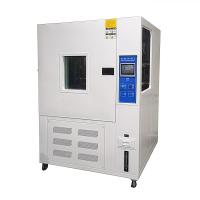
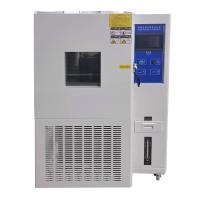
The body of the walk-in constant temperature and humidity Test Chamber (the main body of the Test Chamber) is divided into six chambers and a double opening door, the size is 1800x 2000mm, the cavity is made of high-quality stainless steel plate for lining (to prevent long-term The inner wall is rusted when exposed to humidity), the outer lining is made of good color steel plate, and the insulation medium is polyurethane rigid foam insulation, which is light in weight and impact resistant, and has good heat insulation performance. The door material is also made of color steel plate, and the door handle is open inside and outside. So that the test personnel can freely open the door from the closed room.
2. Tools
The base of the walk-in constant temperature and humidity Chamber is made of 8# channel steel welded grid, so that it can bear the weight of the box and personnel samples under horizontal conditions without causing unevenness and cracking on the bottom of the box . .Loading capacity 200kg/square meter.
The heater of the walk-in constant temperature and humidity Test Chamber adopts a nickel-chromium wire electric heater with a porcelain frame, which has small thermal inertia and long service life. The controllable pulse duty ratio PID signal is output by the instrument and controlled by a solid state relay, and the control is stable and reliable.
3. How to use
1. Turn on the heating switch, all three stages are turned on at the beginning, and the heating speed is fast. After heating to the required temperature, if the required test temperature value is lower than 100°C, the second stage heating switch can be turned off, leaving only the first stage. The heating switch can be turned on for temperature compensation. If the required test temperature is higher than 100°C, the second to third stage heating switches can be reserved for temperature compensation.
2. Photochemical reactions are usually not very sensitive to temperature, but the rate of any subsequent reaction depends on temperature. The rate of these reactions increases with increasing temperature. Therefore, it is very important to control the temperature during UV exposure. , The temperature of the constant temperature and humidity Test Chamber needs to be consistent with the highest temperature of the material directly exposed to sunlight. In this instrument, the UV exposure temperature can be set to any temperature between 50°C and 80°C according to the illuminance and ambient temperature. One temperature: The UV irradiation temperature is regulated by a sensitive thermostat and purge system, so that the temperature of the aging box has excellent uniformity.
3. Using a unique condensation device to simulate the impact of rain and dew on the surface of the sample. In the condensation cycle, the water injection tank at the lower part of the test inner shell is heated to generate steam heat, and the steam maintains 100% relative humidity in the constant temperature and humidity Test Chamber. With a certain temperature rise, the sample forms a cooling effect of ambient air on the inner wall of the Test Chamber, making the temperature of the test surface lower than that of the steam. This temperature difference causes liquid water to condense on the test surface throughout the condensation cycle.