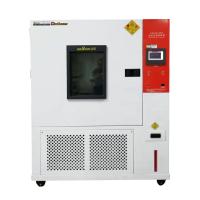
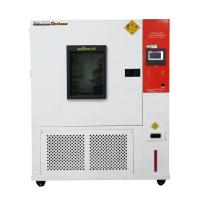
1. Observe the refrigeration compressor of the high-low Temperature Test Chamber
It is very important to be able to start the operation of the machine. If the compressor can be started during operation, it means that each circuit from the main power supply to the compressor is normal, and there is no problem with the electrical system.
When there is no problem with the electrical system of the high-low Temperature Test Chamber, continue to check the refrigeration system. First check the high-low Temperature Test Chambers in the two sets of refrigeration compressors. If the discharge and suction pressure of the low-temperature compressor is lower than normal, and the suction pressure is evacuated, it indicates that the amount of refrigerant in the main refrigeration unit is obviously insufficient.
Then touch the exhaust pipe and suction pipe of the R23 compressor of the main engine of the high-low Temperature Test Chamber. If the temperature of the exhaust pipe is not high, the temperature of the suction pipe is not low (no frost). This also explains the lack of R23 refrigerant in the main unit.
2. Observe the two sets of units in the high-low Temperature Test Chamber
One of the temperature control Test Chambers is the main unit, and the other is the auxiliary unit. When the cooling rate is large, the two sets of units work at the same time. At the beginning of the temperature maintenance phase, the two sets of units are still working simultaneously.
When the temperature starts to stabilize, the auxiliary unit will stop working, and the main unit will keep the temperature down and stabilize. If the main unit R23 leaks, the cooling effect of the main unit will not be great. Since the two units work at the same time during the cooling process, there is no temperature instability, but only the cooling rate is reduced.
In the temperature maintenance stage, once the auxiliary unit stops working and the main engine has no cooling effect, the air temperature in the high-low Temperature Test Chamber will rise slowly. When the temperature rises to a certain level, the control system will start the auxiliary unit to cool down, and then assist the unit to stop working again. The failure phenomenon that the low temperature cannot be maintained occurs repeatedly.
3. Check the refrigeration system of the high-low Temperature Test Chamber
Use a combination of a leak Detector and soapy water to check for leaks. If the hot gas bypass solenoid valve stem is found to be cracked or cracked, replace the solenoid valve. Use it if you find leaks elsewhere. Oxygen welding will completely repair the leak, then refill the system with fluorine, and system operation can resume.
Only when people have a deep understanding of the working principle and working process of the high-low Temperature Test Chamber can they quickly solve various problems that arise during the operation of the high-low Temperature Test Chamber.