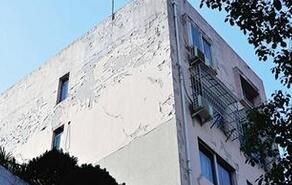
 1. Coating peeling off
 1. Coating peeling off
Due to the poor adhesion of the coating, the phenomenon that the coating film falls off due to external force is called coating film peeling. The degree of peeling can be divided into: small flakes with a diameter of less than 5mm are called scale peeling; large flakes are called shell peeling; peeling off in pieces is called peeling; the separation between the coating film and the coating film is called peeling. Layer peeling.
2. Poor adhesion
In the case of repair coating, the coating film is usually torn off after removing the masking welt tape, which is called poor adhesion. Peeling is one of the common defects in the coating of plastic parts.
Etiology
1) The surface is polluted before painting, such as wax, silicone, resin, oil, rust, soap, stearic acid powder, grinding dirt, engine discharge, poor pretreatment of the painted surface.
2) The painted surface is too smooth.
3) The selected primer does not match the substrate or the old paint surface, and the primer layer is not dry and solid.
4) Poor quality of diluent (poor solvency).
5) The coating is properly matched.
6) Apply stickers before the top coat of the first color in the two-tone system is properly cured.
7) Allowing the finish to dry too long before removing the masking tape.
8) The atmosphere is humid when spraying the intermediate coating, the diluent volatilizes too quickly or the primer is prepared overnight in a humid environment, and an invisible water film is formed on the surface of the intermediate coating, and the top coat is sprayed immediately.
9) If the metal base paint is left for too long after spraying (exceeding the time recommended by the paint factory), the adhesion between the finish layer and the base paint layer will become poor after spraying the varnish.
prevention
1) Before painting, ensure that the surface to be painted has been effectively cleaned (such as scrubbing the painted surface with an organic solvent) 2) Choose a well-matched paint (primer and topcoat).
3) Properly polish the surface to be painted (especially the old paint layer should be polished to improve the adhesion of the coating).
4) Use qualified and good thinner to spray with correct viscosity.
5) The primer layer should be completely dry before spraying the topcoat, or spray the next primer (or topcoat) within the period suggested by the paint factory.
6) Cover and remove the cover at the appropriate time.
7) After drying the moisture on the primer surface, spray the topcoat.
remedy
1) In severe cases, remove the exposed villages and repaint them.
2) If it is caused by an error in the covering technique, level the affected part, trim the edge of the nozzle, and then spray again.
Note: Poor (unqualified) adhesion between topcoat and cathodic electrophoretic primer Example: In recent consulting activities, the newly built cab coating lines of two agricultural automobile factories in Shandong found that the topcoat was on the cathode during commissioning. Adhesion on electrophoretic primer is substandard or spotty. The coating process system adopted is ! "!#, without intermediate coating. The method of measuring the adhesion force on the spot after sticking and tearing off the square tape is adopted. If the topcoat film is not torn off, it is qualified, and if the topcoat film is torn off, it is Unqualified, the more "squares" are torn off, the worse the adhesion. Analysis of the cause:
1. The adhesion of general synthetic resin topcoats on cathodic electrophoretic primers baked at high temperature is not good, and two suppliers are used, and matching tests have not been done in advance;
2. The primer layer may be polluted, such as polishing putty putty to produce paint surface pollution, because after scrubbing with solvent, the adhesion of the topcoat is improved. The lesson is that from the beginning of design to the selection of coating materials before putting into production, the new coating line should conduct coating matching tests to ensure the variety of materials and process specifications.
Scale peeling: long-term disrepair, the result of long-term aging and weathering of the coating film (powdering, cracking, prickly heat, etc.), due to atmospheric invasion, the adhesion between the film layers or between the coating and the substrate is gradually destroyed, causing the coating film to appear scaly peeling off. It is one of the most serious states of coating film damage. In the automobile body coating or repair coating occasions where the painted surface is leveled by scraping putty, such coating film defects often occur during the use of the vehicle due to the quality problems of the putty and the aging of the putty layer. In addition to the above-mentioned aging of the coating film and the quality of the putty layer, some causes are also related to the cause of poor adhesion and peeling of the coating film in the previous section (P).
Its remedial measures can only be repainted after effective eradication.