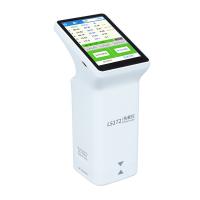
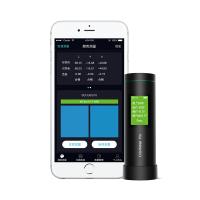
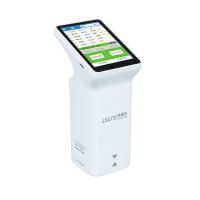
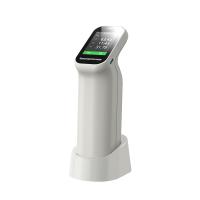
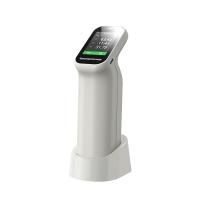
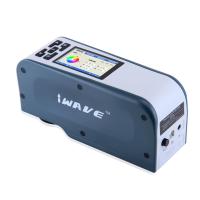
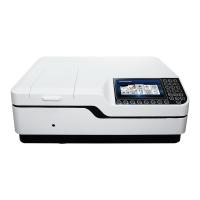
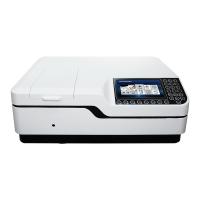
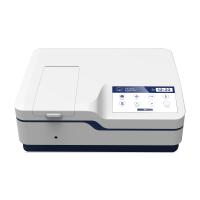
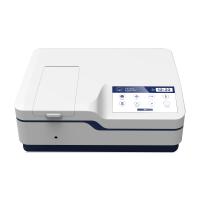
Calibration method: Calibration is performed in CIELab* or Yxy chromaticity coordinates and DE* color difference.
Spectrophotometers and Colorimeters

Color is an important variable that needs to be controlled in many industries and sectors. The objective measurement of color is performed by devices that enable it, specifically Colorimeters, Spectrophotometer s or spectroColorimeters, which are commonly used to measure L*a*b* coordinates and calculate the color difference between standards and samples, eg as DE*; or, in areas such as signaling, the device is often used for measurements in Yxy coordinates.
Color is the result of radiation interacting with objects, detected by Detectors taking into account the way light interacts with objects. Thus, when measuring color, the measurement conditions need to be known. Any change in the measurement conditions will result in a change in the color coordinates.
Densitometers and Spectrodensitometers

Densitometers are commonly used in the graphics industry and printing services, where teams measure the results of radiation from objects found by Detectors. For reflection densitometers, they evaluate the light reflected by the sample, substrate or paper under test.
Spectrodensitometers measure not only optical density but also CIELab* color coordinates.
Different standards specify the reading conditions for measuring optical density. Therefore, the densitometer can measure under the following conditions: State A (ANSI PH2,18); State E (densitometer response, the European accepted standard for colored reflection densitometers); State I (called narrowband); and State T ( broadband color reflection densitometer response).
multi-angle Spectrophotometer

Sectors and industries that need to evaluate metallic colors or paints, pearlescent effects or pearlescent coatings often use multi-angle or supporting angle Spectrophotometer s because these devices can obtain colorimetric information at the same illumination angle as well as at different angles. observe. As a result, the device can measure colors in materials where optical phenomena occur, where visual changes may occur depending on the angle of illumination, as often occurs in the automotive industry or the cosmetics industry.
This type of device evaluates color based on geometry, light source, and observer.
Gloss meter

Gloss measurement is a method of evaluating the appearance of a product, surface or material. This effect or visual perception of surfaces has to do with the reflection of light. When light hits a surface, diffuse reflection and specular reflection occur, with the latter type of reflection creating a glossy effect.
To evaluate gloss by measuring the light reflected in the specular direction, a device called a gloss meter is used.
These devices are widely used to objectively and quantitatively evaluate gloss in companies specializing in the manufacture of paints, varnishes, plastics or automobiles, etc., where gloss is required for certain products they manufacture or use, in In many cases, the case will be accepted or rejected.