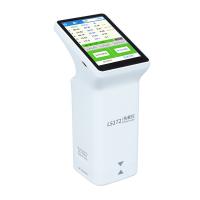
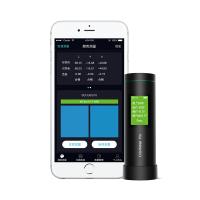
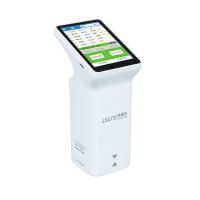
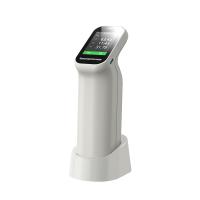
color standard
Color standards are often used in industry for a variety of purposes, including routine verification of equipment, comparison of multiple equipment within the same company, periodic inspections and even internal equipment calibration.
Color standards are calibrated for the necessary geometry, light source and observer conditions.
geometry
Geometry 45º:0º. This geometry is often used in the graphic arts field and the signage industry because it does not include gloss in color measurements.
Sphere geometry. The integrated illumination sphere system can perform Specular Included Mode (SCI) and Specular Excluded Mode (SCE) measurements.
Of the two geometries mentioned above, the spherical geometry is widely used in all fields.
Geometry 0º:0º. This type of measurement is used in devices that measure color by transmission and is used to measure liquids or translucent solids (glass, plastic, etc.). Laboratorios Eyco is the only Spanish laboratory accredited to calibrate equipment of this geometry.
observer
Without an observer, color cannot be detected and therefore measured. The types of observers are standardized by the CIE: 2º and 10º. Each of them represents a different field of view. 10º observers are common, although it always depends on the type of company and department.
light source
A light source is the type of light that falls on the sample whose color we want to measure. The light source is the spectral distribution curve of the light source.
Common illuminants in Colorimeters and Spectrophotometer s are: D65, D50, A and C. Specifically, illuminants D65 and D50 correspond to daylight. The first is widely used in various fields, while the second is usually common in the field of graphic arts. As for light source A, it refers to artificial light, specifically, it simulates an incandescent light bulb.
In addition, there are other light sources that mimic fluorescent light sources, although their use is usually limited to very specific applications or certain test regulations that require it.
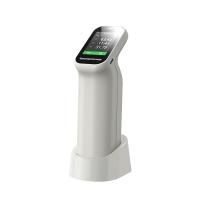
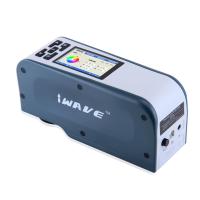
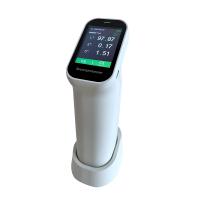
Colorimeter and Spectrophotometer Standards
Colorimeters and Spectrophotometer s usually provide some reference standard. This standard is usually ceramic and white, although green standards are sometimes offered. These standards are characterized by stability and require some maintenance. They are typically used for routine (usually daily) adjustments of equipment so that correct color measurements can be verified.
Proper maintenance of these standards is recommended to avoid dust, fingerprints, damage, scratches, etc. on them. In order to verify that its value in the color coordinates does not change over time, periodic verification can be carried out. Color standards are calibrated using the same geometry, illuminant and observer conditions as the device and can be calibrated in CIELab* and Yxy coordinates.
When using color scales for equipment comparison within the same company, it is necessary to have a well-maintained and calibrated standard sample whose color coordinate values are known and stable so that the same standard sample can be used. Measured with different instruments.
Thus, for example, equipment used in a laboratory can be compared with that used in a production plant and assessed for any deviations that could lead to rejection of a batch.
Color standards are also used by companies for periodic inspections or for extended periods of time between different externally calibrated Colorimeters or Spectrophotometer s. With this, the company ensures that the equipment measures correctly and removes doubts about possible improper measures or the correctness of the measurement conditions, etc. Possession of calibrated color standards is the company's guarantee of color certainty coordinates of said standards.
Likewise, some companies choose to have a complete set of standards that allows them to do their own in-house calibration. In these cases, the correct course of action is to use a set of standards covering the entire chromaticity diagram and have an internal calibration procedure while calculating the uncertainty.