On the labels of creams, lotions or solar sprays, so-called sun protection factors (SPF) appear, easily providing information to consumers about the level of protection.
What exactly it is, how it is estimated, and what criteria are used to determine the effectiveness of these products are things that are generally unknown to the vast majority of users.
Types of UV radiation from the sun
We know that solar ultraviolet radiation (UVR) is divided into three types:
UVC ranges from 270nm to 290nm.
UVB from 290nm to 320nm.
UVA from 320nm to 400nm.
The first of these radiations does not reach the Earth's surface because it is absorbed by the ozone layer. However, both UVB and UVA can be harmful to human skin if exposed for long periods of time without protection.
For this reason, organizations such as the European Commission have determined that sunscreen products need to be effective against UVB and UVA radiation. The cosmetic and pharmaceutical industries rely on standardized methods for determining the effectiveness of sunscreens. Thus, for example, the sun protection factor (SPF) in Europe is estimated according to the international sun protection factor test method (Colipa, 2006).
SPF estimation method
For SPF estimation, in vivo and in vitro methods.
In the first case, the analysis was carried out on people who voluntarily underwent a test, in which the protection of the product from the sun was assessed by applying 2 mg/cm2 of the product to the skin and subsequently irradiating it with a UVR source (290-400nm).
The sun protection factor (SPF) is determined by calculating the ratio between DEM with protection and DEM without protection, taking into account the minimum dose of UV radiation required to produce redness in the skin, or equivalently the minimum erythrocyte dose (MED) .
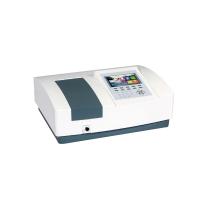
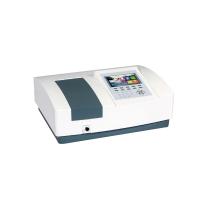
But SPF can also be obtained in vitro by simulating the skin condition on a solid substrate when sunscreen is applied and spectrophotometrically measured (290-400nm). SPF is usually determined using the following formula:

E(λ): Standard solar irradiance.
B(λ): Erythrocyte efficacy.
A(λ): Absorbance of obtained solar product samples.
ultraviolet radiation
Ultraviolet radiation is invisible to the human eye and includes wavelengths from 400nm to 15nm, which means it ranges from wavelengths shorter than the violet end of the visible spectrum.