How to measure the hidden percentage of a product?
Some fences, trellises, and artificial hedges display a hidden percentage on their labels. One way to show it is to explicitly state this percentage. Another way is through some kind of icon or symbology that indicates hidden levels.
For example, Cathedral Gardens chooses to report the level of concealment using icons ranging from low concealment to high concealment.
But how do you know this hidden percentage? Manufacturers send product samples to professional laboratories and conduct hidden tests. This test basically involves evaluating the amount of visible light, the electromagnetic spectrum, passing through the sample.
To perform this type of testing, you need to calibrate your equipment to ensure measurements are traceable to standards and reference laboratories. In addition, it is necessary to have facilities that guarantee the absence of external light and controlled environmental conditions.
Concealment testing is based on the principle of light transmission:

Can the discoloration of the case be measured?

Color loss can be analyzed by taking color measurements before and after subjecting a product to accelerated weathering testing. This test can be performed on artificial hedges, concealment nets or fences, whether natural or man-made.
Manufacturers looking to provide consumer assurance of quality often commission laboratory tests to evaluate colorfastness to light. This can be done in an objective and reproducible manner by color measurement before and after the aging test described above.
These products support discoloration due to prolonged exposure to sunlight, and color measurements were taken before and after weathering tests, in which samples were subjected to UV exposure and humidity cycles, simulating the environmental conditions to which such products might be subjected.
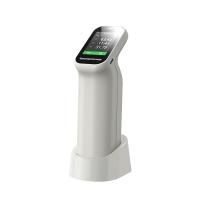
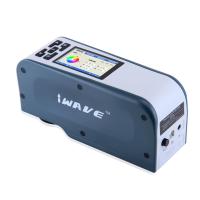
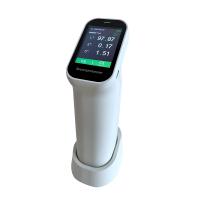
For the evaluation of color fastness, it is necessary to ensure that the color measurement conditions before and after the aging test are the same. Evaluation of color loss can be done by calculating a parameter called color difference CIE Lab* (ΔE*).
Unlike performing visual color comparisons, calculating color differences provides completely objective and quantitative results.